
As new energy vehicles, artificial intelligence, 5G communication, smart devices, and industrial automation continue to develop, the electronic components industry is undergoing rapid transformation.
Electronic products are becoming smaller, more integrated, and more reliable. Meanwhile, global supply chains need stricter rules. This includes tracking product quality, managing production data, and ensuring regulatory compliance.
Laser marking creates permanent, precise marks with no consumables. It also integrates easily with automated production lines. As a result, laser marking is increasingly important in electronic component manufacturing.
In 2026, lasers will do more than just surface marking in electronics. They will aid in precision processing, digital traceability, smart manufacturing, and automation integration.
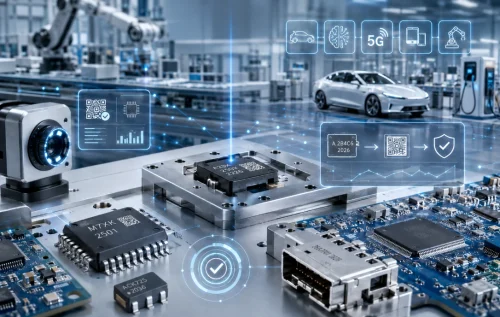
Upgrading Electronic Manufacturing Drives Continuous Growth in Laser Marking Demand
In recent years, the global electronics industry has continued to advance. It aims for better performance and reliability. Consumer and automotive electronics set higher requirements for electronic components. New energy and communication equipment do too:
• Product sizes are becoming smaller;
• Component structures are becoming more complex;
• Production batch management is becoming stricter;
• Product lifecycle traceability requirements continue to increase.
In the past, markings on electronic components served basic purposes. They identified product models, brand logos, and production dates. Today, however, electronic manufacturers need marking technologies to achieve more complete data management:
• Unique product identification (SN)
• QR Code / Data Matrix
• Lot Number
• Production parameter records
• Supply chain tracking
As a result, laser marking is more than a traditional way to print information. It has become an important part of product traceability and smart manufacturing.
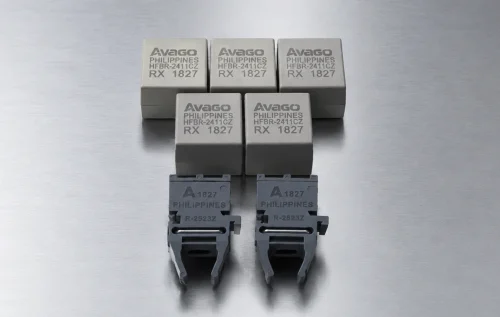
Miniaturization of Electronic Components Drives the Development of High-Precision Laser Technology
Smartphones, wearables, new energy vehicle control modules, and industrial sensors are evolving. As they do, electronic components keep getting smaller. Thus, this leaves less space for marking.
Miniature connectors and precision terminals need clear identification in tight spaces. So do camera modules, sensors, PCB components, and electronic plastic housings. All these components need clear, stable markings that remain readable over time.
Therefore, future requirements for laser equipment in the electronics industry will change. It will shift from “being able to mark” to “precision processing”:
• Smaller spot size
• Higher repeat positioning accuracy
• Lower heat impact
• More stable batch processing consistency
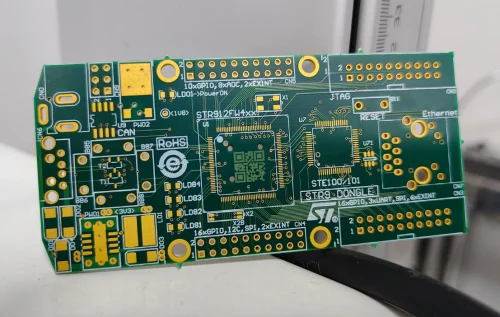
Traceability Requirements Make QR Code Marking an Important Standard in Electronic Manufacturing
Global supply chains are becoming more complex. For this reason, electronic manufacturers need better product lifecycle management.
Unlike labels, direct laser marking is less likely to wear off or detach easily. It can also withstand high temperatures and chemical corrosion, helping keep the marking readable over time.
As such, fields like PCB manufacturing, connector production, and automotive electronics increasingly use laser QR codes and serial numbers. They help track production, manage quality, and support after-sales tracing.
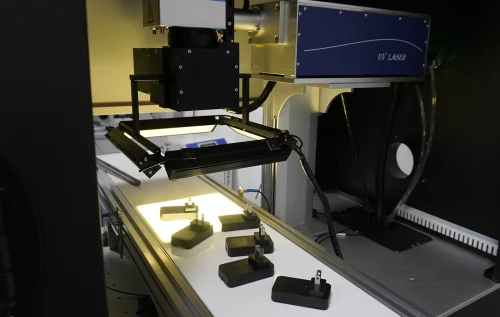
CCD Vision Positioning and Automation Integration Become New Purchasing Trends in the Electronics Industry
Electronic manufacturing features small product sizes, multiple models, and high production speeds. Traditional manual positioning methods increasingly struggle to meet efficient production requirements.
CCD vision positioning, autofocus systems, and online flying laser marking are helping manufacturers. They locate parts accurately, switch between models quickly, and maintain support for high production speeds.
In the future, more manufacturers may choose complete laser marking systems instead of standalone machines. These systems can combine laser marking, CCD vision, automation, and production data management.
CCD vision positioning, autofocus systems, and online flying laser marking help companies achieve:
• Automatic processing area detection
• Automatic deviation correction
• Fast switching between multiple models
• Automatic product position recognition
• High-speed continuous production
Future Development Direction of Laser Marking in the Electronic Components Industry in 2026
Future laser marking in the electronics industry will focus on three main areas:
- From simple marking to intelligent traceability.
- From conventional processing to precision manufacturing.
- From standalone equipment to intelligent production systems.
Hispeed Laser Electronic Components Laser Marking Solutions:
• UV Laser Marking Machine:
Suitable for PCBs, plastic electronic components, and precision parts. It offers low heat impact and high-contrast fine marking.
• Fiber Laser Marking Machine:
Suitable for connectors, metal housings, and structural components, delivering fast, permanent marking.
• Laser Marking Machine with CCD Vision Positioning System:
Suitable for small-sized, high-precision electronic components, enabling automatic positioning and stable mass production.
• Automated Laser Marking Solution:
Supports production-line integration to enable high-speed manufacturing and intelligent traceability.
Conclusion:
In 2026, the electronic components industry will shift. It will focus not just on making products smaller and more powerful. More importantly, manufacturers need more transparent, intelligent, and reliable production management.
Laser marking is no longer a simple process. Now, it’s a key technology that links products, manufacturing, and digital supply chains.