
Today, global infrastructure construction is booming. City pipeline systems are becoming smarter while environmental projects and automated factories are also growing fast. As a result, manufacturers of plastic pipes, metal pipes, and fittings are expected to improve in three areas: product traceability, quality management, and automated production.
Traditional inkjet coding is widely used, but it has limits in high-speed extrusion, outdoor environments, and long-term applications. Over time, these can cause poor adhesion, high maintenance costs, and environmental concerns.
In 2026, laser marking will spread in the pipe industry. This will help pipe manufacturing improve production speed, product traceability, and intelligent manufacturing.
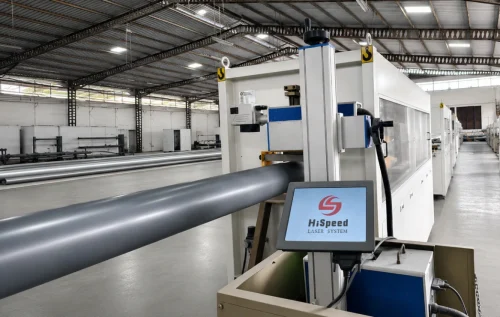
High-Speed Online Laser Marking Becomes a New Trend for Extrusion Production Lines
Pipes are often made through continuous extrusion. The production line runs at high speed for long hours, so marking equipment must work reliably.
Online laser marking is a non-contact process. Installed directly on the extrusion line, it marks pipes while production continues, without stopping the line.
Main applications include:
- Pipe diameter and specification marking
- Pressure rating (PN/SDR) – Meter length marking
- Batch Number – Production Date
- QR code/barcode
- Company logo
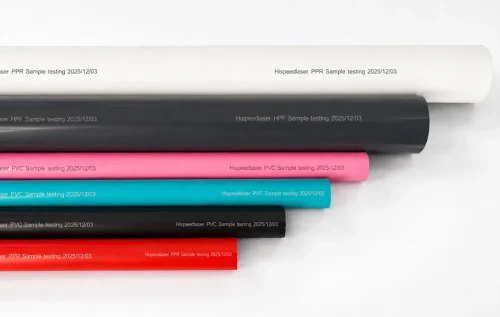
Plastic Pipe Applications Drive Rapid Growth of Laser Marking Technology
Plastic pipes are an important growth area for laser marking. PVC, PE, PP, and HDPE pipes are widely used across many industries.
Common applications include:
- Water supply
- Drainage
- Gas transport
- Agricultural irrigation
- Power communication
- Industrial piping
As a result, manufacturers need clearer, more stable, and long-lasting markings.
While traditional inkjet coding covers basic marking needs, it faces several challenges in plastic pipe production.
- Some plastic materials have low surface energy, which reduces ink adhesion.
- During high-speed extrusion, production speed can affect coding quality.
- Over time, UV exposure, rain, and friction can cause markings to fade or become harder to read.
Laser marking processes the material surface without contact. It can reduce the need for ink and other consumables while providing consistent marking results.
As plastic pipe production moves toward advanced materials and smarter manufacturing, laser marking is expected to replace traditional coding in more production lines. This shift could make laser marking an important part of modern pipe manufacturing.
QR Code and Digital Traceability Requirements Upgrade Pipe Marking
With the continuous improvement of global infrastructure construction and quality management systems, pipe products require not only basic information display but also full lifecycle traceability.
Future pipe marking will carry more digital information. Through QR codes or data encoding, manufacturers can establish a data chain. It connects production, quality inspection, warehousing logistics, engineering installation, and later maintenance.
By scanning QR codes on pipes, companies can quickly get:
- Raw material batch information
- Production dates and time
- Production Line Number
- Quality Inspection Records
- Product Certification Information
- Installation and maintenance data
Laser marking is more durable than labels or ink printing. So it is more suitable for underground pipelines, gas pipelines, industrial transport pipes, and outdoor projects.
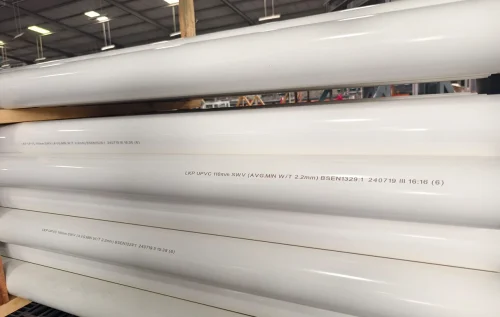
Laser Replacement of Inkjet Coding Continues to Accelerate
For decades, inkjet coding has been the main marking method in the pipe industry. However, manufacturers are focusing more on production efficiency, environmental requirements, and long-term reliability, traditional coding methods face new challenges.
Main issues include:
Continuous consumption of ink, solvents, and cleaning agents
Printhead clogging and ink line deviation affect continuous production.
Environmental pollution concerns
Environmental regulations encourage reducing chemical consumables.
Compared with traditional inkjet coding, laser marking offers:
- Little or no marking consumables
- Lower routine maintenance needs
- Durable, wear-resistant marks
- Reduced use of inks and solvents
- Easier integration with automated production lines
Thus, in the future pipe industry, laser marking is more than a replacement for inkjet coding. It will be a key tool to help manufacturers lower costs, improve efficiency, and move toward smart manufacturing.
HispeedLaser Pipe Industry Laser Marking Solution
To meet the continuous extrusion productio, HispeedLaser provides an Online Flying Laser Marking Solution. It can be built directly into PVC, PE, PP, HDPE, and other pipe production lines to achieve high-speed, non-stop automated marking.
Unlike inkjet coding, the machine needs no production stops and no manual loading. It automatically synchronizes marking content according to production speed, meeting the needs for high efficiency, high stability, and long-term traceability.
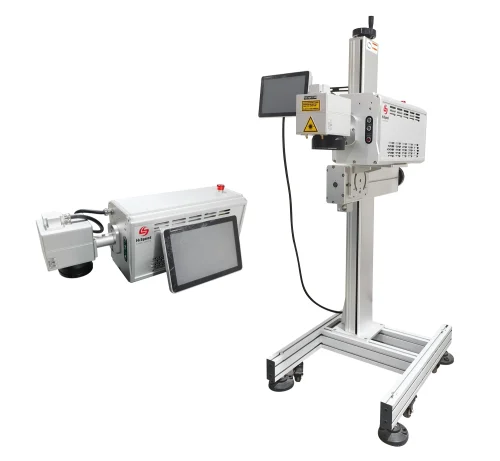
Key features:
High-Speed Online Marking
Supports continuous extrusion production lines and marks products in real time as they move, improving production efficiency.
Intelligent Synchronized Traceability
Sensors and encoders help the system track production speed and time the marking process. It can mark variable information, such as batch numbers, production dates, specifications, QR codes, and barcodes.
Permanent and Clear Marking
The marking content provides excellent wear resistance and long-term stability. This makes it suitable for outdoor pipes and engineering materials.
Flexible Production Line Integration
Based on customer needs, the system provides installation brackets, conveyor systems, inspection devices, and fume extraction equipment. This upgrades a single machine into a complete automated production solution.
Future competition in the pipe industry will not only focus on materials and pricing, but also on production efficiency, quality traceability, and intelligent manufacturing capabilities.
Laser marking will become an important technological direction for pipe manufacturers to enhance product value and production efficiency.