
Laser engraving is an efficient technique for creating intricate detailing on various materials. A color laser engraving machine takes a step forward and offers you more fascinating results. You can add vibrant hues to your engravings. It transforms your simple design into a stunning masterpiece.
This unique engraving machine allows you to unleash your creativity. However, to leverage it, you need to understand it. This blog post will offer you complete guidance on color laser engraving machines. You’ll also learn which materials you can use for color laser engraving. So, let’s get into it.
How Does a Color Laser Engraving Machine Work?
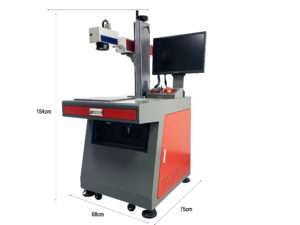
A color laser engraving machine employs a focused light beam for engraving. Various parameters of the laser beam are adjusted to create color variations on a material’s surface. Color laser engraving is commonly done on metals, like stainless steel or titanium.
Instead of dyes and pigments, this technique relies on creating laser-induced oxidation reactions. Other color engraving approaches employ color color-filling method. In contrast, colour laser engraving alters the characteristics of the surface. The laser beam interacts with the material and generates localized heating. This results in an oxidation reaction, forming an oxide layer.
The thickness of the oxide layer and the refractive properties produce a color spectrum. The variation in laser parameters, like power, pulse duration, and scanning speed, determines the thickness of this oxide layer. Its thickness scatters the light differently and produces various colors.
Color Laser Engraving on Various Materials

Color laser engraving is a versatile technique. It is not restricted to just metals. You can employ it for several materials. Various material reacts differently to the laser. It produces unique color effects and finishes. Below are some common materials used for color laser engraving:
Color Laser Engraving on Metals
Color laser etching on metal surfaces creates vivid colors. You can use various metals, including stainless steel, titanium, aluminum, copper, and brass, for this technique.
A high-power fiber laser is used for color laser engraving on metal surfaces. For non-metals, you have to go with a UV laser or CO₂ laser machine. Fiber laser offers a more focused laser beam than other types. It enables extremely precise and detailed engraving on metal surfaces.
Its high energy density and stable wavelength create fine color gradients and markings. It is done via oxidation reactions. The oxide layer formed reflects various colors from subtle shades to vibrant tones.
Color Laser Engraving on Acrylic
When it comes to color engraving acrylic with a laser machine, you need double acrylic. Double acrylic has two colors. One on the top outside layer and the other one in the core.
As the laser beam interacts with the top layer, it precisely removes or vaporizes it. It reveals the outer surface to exhibit the contrasting color beneath. This process creates sharp, vibrant, and long-lasting engravings. The laser engraver doesn’t need additional inks or paints.
The depth and clarity of the engraving can be controlled by adjusting the laser’s parameters. Double-colored acrylic is commonly used for signboards, nameplates, awards, and decorative panels. It is utilized in the parts where clear contrast and visual appeal are essential.
Color Laser Engraving on Glass
Color laser engraving on glass is a delicate process. It demands precise control to prevent cracking or chipping. Unlike metals and acrylic, color laser engraving on glass doesn’t rely on oxidation or melting. Instead, you have to apply an acrylic paint coating on the glass surface before engraving.
The laser beam then selectively removes this coating. It exposes the base material, creating vivid patterns, text, or images with high contrast. This method allows for colorful and detailed engravings without damaging the glass itself.
UV lasers are preferred to achieve optimal results with this approach. It offers gentle yet precise energy control suitable for fragile materials.
You can utilize glass color engraving with a laser to combine elegance with durability. It creates decorative panels and personalized gifts. It also enhances the aesthetic appeal of trophies, signage, and architectural elements. The detailing gives a premium look while maintaining the structural integrity of the glass.
Factors Affecting Color Laser Engraving
Several factors influence the quality, consistency, and appearance of color laser engraving. Understanding these parameters helps achieve desirable results.
Potencia láser
Laser power determines the amount of energy delivered to the material’s surface. Excessive power can damage the material by burning or deforming it. An insufficient laser may fail to create the desired oxidation or depth. You need to set an optimal laser power to ensure accurate color formation and clean detailing.
Longitud de onda del láser
The laser wavelength defines how the beam interacts with the material. For example, fiber engraving lasers have a wavelength of 1064nm. This wavelength is efficiently absorbed by metallic surfaces. It creates enticing colors on oxidation of the metals.
CO₂ lasers have a wavelength of 10.6 µm. It enables you to create a yellow color on ABS plastic. On wood, it creates shades of brown, dark brown, or black, depending on the burn depth.
UV engraving laser machines come with a wavelength of 355nm. It burns the non-metals to create detailing in black color.
Focal Distance
Focal distance between the laser and the material. Correct focal distance ensures the laser beam strikes the surface with maximum precision. It produces bright colors and clear details. In contrast, poor focus results in inconsistent oxidation, blurred edges, or uneven color tones.
Material Type and Surface Finish
Different materials react uniquely to laser energy. Metals like stainless steel and titanium generate bright color layers on oxidation. Non-metals, like acrylic or glass, require coatings for color engraving. Smooth, polished surfaces reflect light uniformly, enhancing the color effect.
Conclusión
A colour laser engraving machine is an innovative technology. It offers an amalgam of precision with artistic creativity. You can create stunning colors on various materials with this technique. Controlling various parameters, like power, wavelength, and focal distance, allows you to achieve desired color tones and details. This machine enables you to etch metals as well as non-metals. So get your color laser engraving machine and turn ordinary materials into vibrant art pieces.