
Is laser marking plastic safe? Is it efficient to mark on plastics?
Plastic components are everywhere in modern manufacturing. Think about auto parts or medical devices, you need plastics for various uses. Even consumer electronics and household products rely heavily on plastic materials. In fact, many products we use every day contain plastic parts in one form or another.
As you can realize, plastics are in very high demand. And manufacturers are constantly looking for ways to process it faster, more efficiently, and more effectively. In this case, one important step is marking. All companies need to add logos, serial numbers, or other codes to plastic parts.
At first, marking plastic may seem simple. However, it can be more challenging than you think. Different plastics react differently to heat and light. Some plastics may melt, deform, or become discolored during the marking process.
You can typically mark plastics in various ways. Some common methods include pad printing, screen printing, hot stamping, and laser marking. In this case, the real challenge is choosing the right method for your project. In this article, we will explore the challenges of marking plastics and the common methods used for marking them. You will learn why laser marking is often the preferred solution.

Why Plastics are Challenging to Mark
Unlike metals, plastics are much more challenging to mark. Different plastic materials react differently when exposed to laser energy. Some absorb the laser well, while others reflect it. The following five factors are the main reasons why plastics are challenging to mark.
Pigment Composition
Laser marking plastic is quite challenging because of the pigments. Plastics use various types of organic and inorganic pigments for color. Pigment plays a crucial role in determining how a material absorbs laser light. Some of the pigment colors allow plastic to reflect a particular wavelength. Instead of changing color, laser bleach or scorch the pigments. As a result, marking becomes very hard for lasers.
Fillers and additives
For multiple purposes, manufacturers use various types of fillers and additives. It improves overall strength and flexibility and often affects thermal stability. When you apply a laser to such plastic surfaces, fillers or additives might scatter the laser beam and cause uneven thermal distribution. This unusual behavior results in incomplete, rough, and patchy laser marks at the end. You won’t get a uniform finish.
Reflectivity
Some plastics do not absorb laser light. When plastic surfaces come into contact with laser light, they either reflect or transmit it. Examples of these materials include acrylic, polycarbonate, and others that efficiently reflect or transmit laser light. This energy bouncing or passing makes the marking process harder, since it requires absorption for smooth marking. This lack of absorption also risks the melting of edge materials.
Melting Temperature
Plastics are more sensitive to melting than metals. Laser marking plastics has lower melting points than metals. You can witness that its thermal tolerance is narrow. If the plastic is exposed to extreme laser heat, it may deform, melt, or char the surface, which makes the marking more difficult. On the other hand, if the provided energy is too low, it won’t generate the desired marks. Balancing heat buildup is crucial here. Otherwise, the material will be destroyed or warped out.
Chemical Structure
Plastic forms based on different polymer molecules. They may include PVC, polyethylene, ABS, and others. Each chemical form behaves differently under laser excitation. Some lasers can break down easily under a laser and form a dark mark. Others may not produce smooth marks but rather hazardous fumes or residues. So, a setting that works well on one plastic may not work smoothly on other plastics.
Popular ways to mark on plastic parts
There are many ways to mark plastic parts in manufacturing. Some methods create markings during molding, while others are applied after production. Each technique offers different levels of durability, cost, and appearance. Below are some of the most common methods for marking plastic without burning or damaging it.
Molded In marking
Molded-in marking is a process of marking different parts using the mold cavity. The marking is already engraved in the mold cavity. When you inject the material into it, the liquid takes the shape of the mold. After solidification, it forms the exact shape of the mold. There is no need for extra work after demolding. This process is highly suitable for the automotive, electronics, and medical sectors.
Pour
- Produces extremely durable marks and won’t fade easily.
- No need to add other costs for marking.
- Ideal for large-scale projects.
Cons
- Cannot change the serial numbers or marks.
- Requires a high initial charge for mold engraving.
- Marks are the same color as the plastics.
Laser marking
Laser marking is one of the most widely used methods for marking various materials. Its flexibility allows it to mark both metals and non-metals. Laser marking on plastics is also a popular use case. When the laser beam encounters the surface, it produces microscopic bubbles. It chemically alters the surface to create a contrast mark.
Pour
- Flexible for marking. Changing barcodes and serial numbers makes the process more efficient.
- Produces sharp black and white or other colors easily.
- Non-contact process; leaves the plastic safe.
Cons
- Requires a high initial investment.
- Setting parameters vary by plastic material.
- A fume extractor is needed for safety.
Tampographie
Pad printing is a process of marking plastic using a silicone pad. It transfers ink from already etched metal to plastics. The pad takes ink and presses it on the surface. This process can easily conform to uneven surfaces, too. So, you can use it for curved and irregular surfaces. It finds smooth application in the toy industry, electronics, and medical sectors.
Pour
- Easily marks 3D, curved surfaces.
- Provide details in multiple color vibrants.
- The setup cost is comparatively low because pads and plates are cheap to produce.
Cons
- Needs continuous purchase of inks and other chemical solvents.
- Proper finishing requires time for the ink to dry completely.
- Marks can fade or be scratched over time.
Sérigraphie
This technique pushes the ink directly to the plastic surface using a blocked stencil mesh. Stencil creates a smooth block in specific areas where the ink should not spread. Therefore, it creates only the desired pattern in accordance with the printing requirement. This method is suitable only for flat and slightly curved surfaces.
Pour
- Thick ink generates bold, vibrant color marks.
- Cost-effective for large volume productions.
- Covers large surfaces better than other methods.
Cons
- Unable to mark complex and deeply curved surfaces.
- Typically, it is a time-consuming process to set up individually.
- Difficult to produce ultra-thin marks.
Hot Stamping
The hot stamping method uses a thermal setup. In this process, a die is heated and pressed onto the foil, which is placed on a plastic surface. This heat and pressure cause the pigments to adhere to the plastic surface. Thus, it creates a metallic or colored print. You can generally find its applications in the cosmetic and packaging industries.
Pour
- Provides a fine, glossy metallic finish, such as gold or silver.
- No need for drying time.
- Resist scratches and chemical exposures.
Cons
- Overheating can cause the plastic to warp.
- The production adds extra cost and time.
- Not suitable for marking complex curves.
Inkjet Printing
Inkjet printing is also a contactless method that drops ink onto a plastic surface. A CNC machine controls the printhead nozzle and forms an exact shape as guided. It supports various types of marking, including text, design, dates, or codes. Besides, it can mark parts moving rapidly on conveyor belts.
Pour
- Offers marking of rapidly moving parts.
- Suitable for large volume productions.
- No risk of physical damage to the surface.
Cons
- Requires frequent cleaning of clogged nozzles.
- Inks may not adhere properly to plastics.
- Maintenance adds extra cost.
How Lasers Mark Without Damaging the Plastic Surface
Many people assume that lasers burn the plastic surface. But in reality, modern laser marking is much more controlled. Various technologies enable lasers to create clear, permanent marks without burning or damaging the surface.
Photochemical Color Change
Photochemical color change is a chemically induced process that does not produce heat. The process breaks chemical bonds in plastics using cold ultraviolet rays. This shorter UV wavelength leads to the chemical reaction. This way, the reaction creates a new color contrast on the surface. Basically, a UV laser marking machine for plastic works in this approach.
Controlled Foaming
This method uses a lower-temperature thermal process to slightly melt the plastic. The induced heat later causes micro-boiling, generating tiny bubbles within the material. After solidification, when light passes through these bubbles, it creates a beautiful contrast and light colored mark.
Laser Sensitive Additives
Special additives are usually mixed during plastic production. When the plastic is exposed to laser energy, it reacts differently, altering the surface color contrast. These additives cause the laser to focus on them rather than on the plastic matrix. Thus, it produces a sharp, visible mark without damaging the base laser-marking plastic.
Picosecond and Femtosecond Pulses
Pulse laser machines use such methods to deliver short light energy in just trillions or quadrillions of a second for non-damaging plastic marking. This high speed makes the marking process much more efficient and safer for plastic materials. It occurs so fast that the surrounding materials don’t get to warp out. Thus, it changes color or vaporizes materials for marking.
Why Perform Laser Marking on Plastic Parts
There are several reasons to choose laser marking for plastics. It creates permanent marks without direct contact with the surface. It reduces wear and minimizes contamination. As a result, it preserves the part’s original shape.
Maintains the Plastic’s Integrity
Unlike traditional methods, laser marking does not physically contact the material to change its color. Mechanical methods use deep cutting into plastics, which often leads to cracking. Here, the laser stands out; it keeps the surface intact and the wall thickness strong. A laser marking machine for plastic plays a vital role in maintaining its structural integrity.
Preserves Sterile and Hygienic Surfaces
Laser marking plastics is far safer than using inkjet or pad printing. In this process, no ink, chemicals, or other substances come into contact with the plastics. As a result, it keeps the surface clean and free of contamination. It is especially suitable for medical and food-grade products. There is no risk of transmitting substances into parts.
Ensures Tactile Smoothness
In hot stamping or mechanical engraving, you may witness deep or rough lines in plastic edges. Well, it’s not suitable for people to handle or carry. Cold laser marking won’t produce a rough and uneven surface. It keeps the polymer flat and smooth to the touch.
Protects Delicate Internal Components
Many types of plastics contain sensitive components inside. For better safety, plastic cases and other shelters should be strong enough to protect their contents. Lasers only work on the outer parts of these plastics. It never produces vibration or heat that reaches its internal integrity. This way, it makes them safe for complex assembled components.
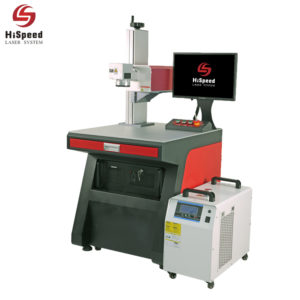
Best Laser Marking Machine for Plastics: LS-UV-5/10/15
The HiSpeed UV Laser Marking Machine LS-UV-5/10/15 is specifically designed to mark plastic materials. It has three orders of intracavity frequency-doubling (THG) technology that produces 355nm UV light for marking. This small facula maintains perfect material integrity and limits the thermal supply. It’s a one-stop solution for plastic requiring damage-free, sharp marks.
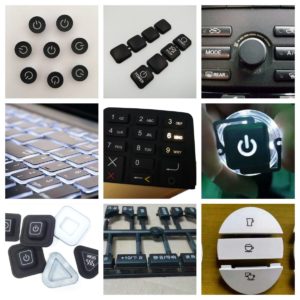
This machine supports power from 5W to 15W with 0.6±0.1mm beam divergence. Its output power ranges from 10% to 100KHz, and it offers a water-cooling system. From packing materials to medicines, mobile phones, keyboards, and other items, you can use it reliably for all of these.
Résumé
Plastic marking is an important part of modern manufacturing. However, marking plastic without burning or damaging the surface is more difficult than you may think. Although there are various methods of marking, choosing the right one is all that matters.
Laser marking plastic is one of the best ways. It uses a highly focused laser beam and controlled laser pulses for the work. It offers excellent precision, durability, and efficiency. In this case, you can consider the LS-UV-5/10/15 UV Laser Marking Machine from Hispeed Laser.
If you are looking for a reliable plastic marking solution, nous contacter today. Our team will help you find the right laser marking system for your application.