
Laser technology has revolutionized the world. From medical treatment to industrial cutting, lasers have opened up wide opportunities in the modern world. When it comes to laser engraving, there are various types of lasers. This is where the topic of Fiber Laser vs CO2 Laser comes in.
Both fiber and CO2 lasers are widely used in laser engraving. However, their main difference is their wavelengths, which suit different materials. Fiber laser is ideal for engraving metals and some non-metals. On the other hand, CO2 lasers are ideal for non-metals or organic materials. In this article, we will explain the differences between these two technologies in detail.
How Does a Fiber Laser Work?
A fiber laser is a solid-state technology. It uses an optical fiber source doped with rare-earth metals like ytterbium. A diode pump sends energy to the fiber, which amplifies the light into a strong beam. It then travels through other optical cables to the focusing lens. The focusing lens concentrates the light and outputs it from the laser head as a tiny, highly focused beam. Thus, it produces a powerful light beam.
When this powerful beam strikes a material surface, it instantly absorbs energy and converts it into heat. The heat quickly melts or vaporizes the material, leaving a clean, deep mark. It happens so quickly in a tiny, targeted spot. As a result, the process is considered both fast and precise.

How Does a CO2 Laser Work?
A CO2-Laser works differently from a fiber laser. It uses a gas tube filled with gases like carbon dioxide, nitrogen, and helium. An electrical current then passes through the tube, exciting the gas molecules and releasing energy as light. Mirrors inside the tube bounce the light back and forth. This buildup generates a strong light beam suitable for engraving or marking.
Afterward, the beam travels through the mirrors, which guide it to the laser head. A lens focuses it precisely on the material surface. Generally, it produces longer wavelengths, typically suitable for non-metals. Non-metals absorb it effectively and burn it, which carves a mark on the surface.
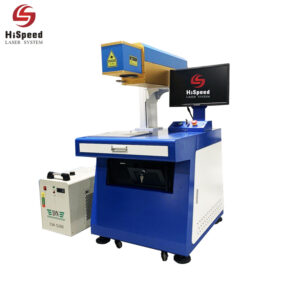
Head-to-Head Comparison: Fiber Laser vs. CO2 Laser
As you know, fiber lasers and CO2 lasers work differently. So, they may have different advantages. Choosing between these two comes down to four factors. Each performs differently in precision, material compatibility, cost, and upkeep. Below, we’ll give you a complete overview of the differences between CO2 and fiber lasers. Understanding these key points helps you choose the right one for your project.
#1 Cutting Precision & Efficiency
Fiber lasers deliver powerful, precise beams that can easily create a narrow kerf. The beam is more focused here. As a result, it creates fine details and sharper edges during engraving. The heat-affected zone (HAZ) remains much lower, meaning less material warping and cleaner outcomes. Cutting speed is also quite fast, especially for thin sheets and intricate designs.
CO2 lasers offer similar precision and cutting efficiency. They ensure superior edge smoothness and provide stable power output throughout the process. However, they can run slower than fiber lasers. But their wider beam suits detailed engraving on non-metals, ensuring unmatched precision. They perform best on materials that absorb longer wavelengths.
#2 Material Versatility
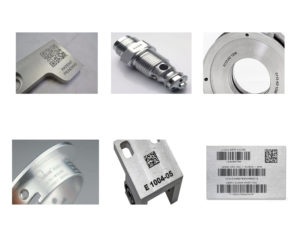
Fiber optic lasers excel at metals. You can easily engrave any metal with it. Its metal versatility includes processing aluminum, stainless steel, brass, copper, titanium, and more. However, fiber lasers may struggle with non-metals such as wood, fabric, leather, and others. For this reason, they are considered a specialized option for metal processing.
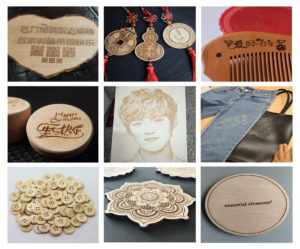
CO2 lasers work best on organic materials or non-metals. A single CO2 laser machine can handle a wide range of materials. These include glass, wood, acrylic, fabric, leather, and many more. You can even use it on coated metals. This versatility suits businesses that work with multiple materials, such as signages, furniture, and craft industries.
#3 Operational Cost & Energy Consumption
Fiber lasers draw less electricity for the same output. Electrical efficiency reaches up to 70%, ensuring maximum output. Overall, they use less power and require no gas or consumables. You don’t need to replace optics or consumables regularly. As a result, it significantly lowers long-term operating costs. The initial price may be higher, but it becomes profitable over time.
In contrast, a CO2 laser may require much more power to achieve the same result. Efficiency remains lower than a fiber laser. It also requires a continuous supply of gas and electricity. You need to refill the gases to keep the process running. These add extra cost over time. However, a CO2 laser’s initial purchase price is lower than a fiber laser’s.
#4 Maintenance & Reliability
A fiber laser requires minimal maintenance. It features a solid-state design. It has no mirrors to align or clean. The laser source can last over 10,000 hours. This way, downtime stays low during daily operation. It also ensures a long diode lifespan throughout the lifecycle. This reliability reduces long-term service costs for busy production lines.
CO2 lasers need more frequent upkeep. Their mirrors require cleaning and alignment when they get dusty and covered in soot. You may need to refill the gas after several thousand hours of cycling. They often require periodic gas tube replacement. It may add time and a small cost over time. But reliability stays solid when you complete this maintenance properly. The machine will serve you as expected.
Industrial Applications of Fiber Laser vs. CO2 Laser: Which One Fits Your Needs?
Fiber lasers are widely used across metal industries. Typically, they are metal-focused. The automotive industry uses them to cut car body panels and engine parts. Aerospace companies rely on them to produce reliable aluminum and titanium components. Electronics manufacturers use them to mark circuit boards, chassis, and casings for tracking.
Other metal fabrication shops also rely heavily on fiber technology for their daily needs. Many people cut steel for construction and industrial equipment. Even jewelry makers depend on it for fine engraving on gold and silver. Many medical device companies also use fiber lasers to produce surgical tools with high precision.
CO2 lasers serve different industries. Since they suit different materials for engraving or cutting, they are much more flexible for the packaging and signage sectors. Packaging companies utilize them for cardboard and foam inserts. Textile companies use them to quickly cut fabric patterns, clothing, and upholstery.
Woodworking shops or furniture makers rely on CO2 lasers for decorative work. You may also see them used in craft and architectural firms for detailed design. Many hobbyists utilize them to expand their business. Overall, each machine type serves different purposes.
When Should You Choose Fiber Laser?
As you are aware, a fiber laser is ideal for metal processing. Choose it when your business focuses on metal or is directly related to metalworking. If you need fast turnaround for high-volume manufacturing lines, it’s a great option for the automotive, electronics, and medical industries. Typically, businesses cutting thin to medium thicknesses will see the speed advantages.
Other key factors include budget, upfront cost, and safety. Fiber lasers may seem expensive at first, but they pay off by lowering electricity bills and downtime and requiring little maintenance. So, if your goal is to increase metal production without extra operating expenses, choose fiber.
When Should You Choose a CO2 Laser?
Choose a CO2 laser when your work involves materials like wood, acrylic, leather, fabric, and others, as mentioned above. It’s ideal for sign shops, packaging, and craft studios. If your budget is limited and you need a lower entry cost, a CO2 laser engraver is a more affordable option. It works well for non-metal-focused businesses.
You may also consider a CO2 laser if you want smooth cuts and detailed edges on softer materials. This machine suits decorative work or custom parts rather than metal fabrication. Choose it when creative ideas, marking, and packaging materials matter most.
ROI & Total Cost of Ownership: Fiber Laser vs. CO2 Laser
Fiber lasers cost a lot to buy, but they save money over time. Lower electricity costs and minimal maintenance decrease long-term costs. Often, it takes only two to three years to recoup the investment while increasing profits.
CO2 lasers cost less upfront and suit low- to medium-range production. Regular gas and mirror upkeep keeps performance steady over time. Overall, better ROI depends on the material types and production volume.
Zusammenfassung
Both fiber and CO2 lasers are widely used in a wide range of applications. Their suitability depends on various circumstances. If you’re working with metals, choose fiber lasers. If you’re focused on cost, CO2 lasers are the cheaper option. The following table summarizes the main differences between these two technologies.
| Faktoren | Faserlaser | CO2 Laser |
| Best For | Metalle | Non-Metals |
| Geschwindigkeit | Faster On Thin Metal | Faster On Thick Non-Metal |
| Kosten | Höher | Lower |
| Wartung | Minimal | Regular |
| Life Cycle | Up To 100,000 Hours | 20,000 To 25,000 Hours |
| Energy Use | Lower | Höher |
Overall, the best laser depends on your actual production needs. Consider the material, workload, operating environment, and available budget. Also consider how you will maintain the device and scale your production. With these factors in mind, you can determine which laser will work best for your project. This helps ensure reliable long-term performance and better value.