Laser Coding Machines for Packaging

Explore laser coding solutions for packaging production lines, including UV, CO₂, and Fiber laser systems for selected plastic, paperboard, glass, and metal packaging applications. Mark dates, batch numbers, barcodes, and other identification codes with a system configured for your material and production requirements.

Why Consider Laser Coding for Packaging?

Laser coding offers an ink-free alternative to conventional printing methods for compatible packaging materials. It can help manufacturers reduce ink and solvent use while producing readable identification codes for product tracking.

Lasercodierung für Plastiktüten

Laser Marking & Coding

  • ✓100% ink & solvent-free marking process
  • ✓Low maintenance with zero printhead fluid clogging
  • ✓Permanent, tamper-proof marks tailored to substrate
Lasercodierung ohne Verbrauchsmaterialien für Produktverpackungen

Herkömmliche Tintenstrahlcodierung

  • ✕Relies on recurring inks & makeup solvents
  • ✕Requires frequent printhead fluid maintenance
  • ✕Code durability depends on ink formulation & adhesion
VS

Laser Coding vs CIJ Inkjet Coding

Merkmal Lasermarkierung Ink-Free CIJ Inkjet Coding
Marking Method Non-contact laser interaction with packaging surface Pressurized liquid ink droplet deposition
Ink & Solvents ✓ Not required (100% ink & solvent free) Required (continuous ink and makeup solvent)
Mark Durability Permanent & tamper-proof; depends on material & settings Vulnerable to smudging, solvent wiping, and abrasion
Routine Maintenance Low maintenance; optics check & extraction filter servicing Frequent printhead cleaning, nozzle unclogging & fluid refills
Operating Costs ✓ Predictable power consumption; zero fluid consumable costs Continuous recurring expenses for inks, solvents & filters
Substrate Compatibility Tailored by wavelength (UV for plastics, CO₂ for cartons, Fiber for metals) Broad compatibility, requires ink formulation matching per substrate

Packaging Laser Coding Solutions

Select from UV, CO₂, or Fiber laser configurations depending on packaging substrate, line speed, code content, and factory integration requirements.

UV Laser Coding

Best For: Heat-sensitive plastics, flexible packaging films, selected HDPE containers, and medical packaging.

Wavelength: 355 nm. Offers cold-marking characteristics that reduce the risk of thermal deformation on thin materials.

CO₂ Laser Coding

Best For: Paperboard cartons, corrugated boxes, coated labels, selected plastics, and glass packaging.

Wavelength: 9.3 µm / 10.6 µm. Widely used for standard date and batch coding on packaging production lines.

Fiber Laser Coding

Best For: Metal packaging, tinplate cans, aluminum containers, foil packaging, and selected rigid plastics.

Wavelength: 1064 nm. Delivers high-contrast marking on compatible metallic and robust packaging surfaces.

Packaging Material Applications

Explore common packaging substrates where laser coding systems are applied for dates, lot numbers, barcodes, and product identification.

See Laser Coding Results on Packaging Materials

Explore marking examples on packaging materials and watch demonstrations to see how laser coding performs on different surfaces.

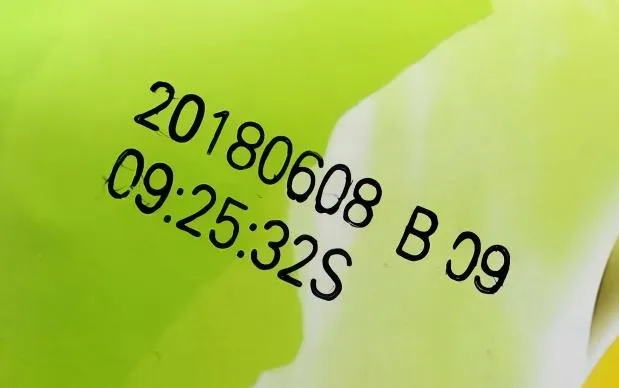
UV Laser Marking on Plastic Packaging

Watch UV laser marking demonstrations on food packaging pouches and plastic bottles used for shampoo, liquid detergent, and other consumer products.

Marking quality depends on packaging material, surface characteristics, and laser settings. Sample testing is recommended before selecting a coding solution.

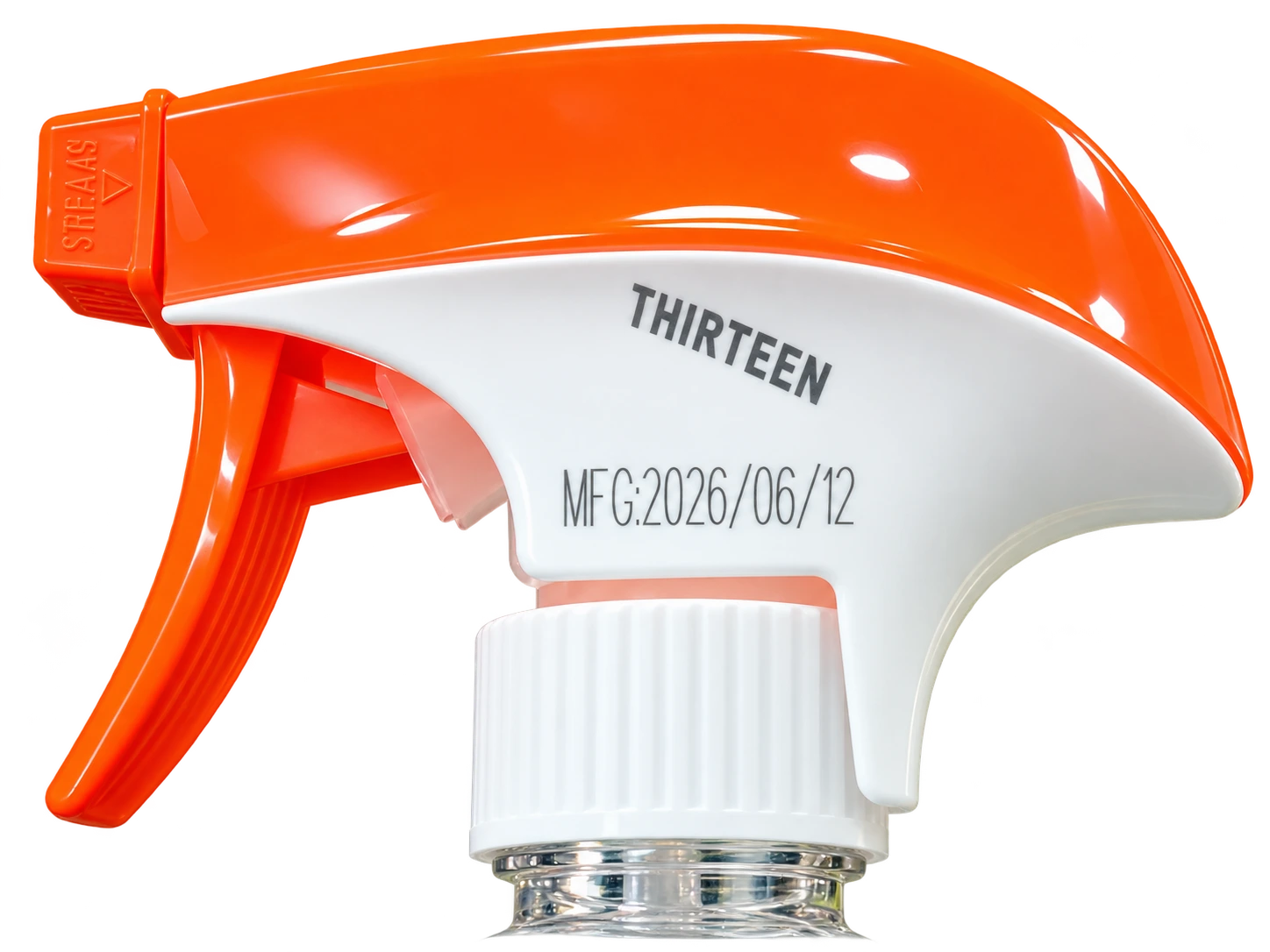
Cleaning spray bottle marked with a UV laser date code
Full Product ViewTrigger spray bottle with UV marking area on nozzle
Close-up of a UV laser marked manufacturing date on a spray bottle trigger
Material: PP Plastic
Magnified Marking DetailCrisp date code on PP plastic with zero thermal burn

Laser Coding Integration for Packaging Lines

Laser coding systems can be configured for different production setups. The appropriate installation depends on conveyor layout, product handling, coding position, line speed, and marking requirements.

Tintenfreie Laserbeschriftung für Produkte

Integration with Existing Conveyors

Laser coding equipment can be integrated into a compatible conveyor setup for marking products while they move along the production line. Line synchronization and installation requirements should be evaluated for each application.

Grüne Laserbeschriftungstechnologie für Verpackungen

Eigenständige Programmierstation

For applications without an existing conveyor, a standalone marking setup may be considered. Optional stands, conveyors, and fume extraction equipment can be discussed based on project needs.

Online Flying Laser Coding Equipment Features

  • High-Speed On-the-Fly Coding: Real-time marking on moving conveyor lines minimizes production interruptions and supports continuous product identification.
  • Ink-Free Product Identification: Produces clear expiry dates, batch codes, QR codes, and barcodes without liquid inks or solvents.
  • Integration with Compatible Setups: Engineered for flexible installation on existing conveyors or standalone coding stations across food, beverage, pharmaceutical, cosmetic, and industrial packaging lines.
Photothermische Lasermarkierung für Verpackungen

Fiber Flying Laser Coding Machine

Raycus 20W / 30W / 50W • Dynamic Line Tracking

View Product Details →

Lösung für die substratreaktive Laserbeschriftung

Industrial Conveyor Integration Setup

Touchscreen Controller • Multi-Directional Floor Stand System

View Product Details →

Unsere Vorteile bei der Laserbeschriftung von Produktverpackungen

Hispeed Laser helps packaging manufacturers choose the right laser coding solution based on material, code content, production speed and line integration requirements. From sample testing to customized installation, Hispeed Laser supports customers in building a cleaner, more stable and cost-effective packaging coding process.

Online-Flying-Laser-Codierungs-Montagelinie
Digitales Laserstyling und -codierung für Luxusverpackungen

Anwendungsbasierte Empfehlung

Select the right Fiber, CO₂ or UV laser solution according to your packaging material, code content, and line speed requirements.

Maßgeschneiderte Linienintegration

Integrated into existing conveyors or used as a standalone system with optional mounting stand, conveyor belt and fume extraction.

Sample Testing & Validation

Send us your packaging samples to verify marking contrast, legibility, and processing speed before making an equipment investment.

Dedicated Engineering Support

Comprehensive technical support from sensor matching and encoder synchronization to operational training and maintenance.

Zuverlässigkeit & Unterstützung

Jedes System wird vor der Auslieferung vollständig getestet, und wir bieten einen umfassenden Kundendienst, um Ihre Produktion am Laufen zu halten. Wir bieten:

Häufig gestellte Fragen

Common technical and operational questions regarding laser coding machine selection, materials, and production line integration.

Was ist der Unterschied zwischen CO₂-, Faser- und UV-Lasermarkierern?

CO₂, Fiber, and UV laser coders use different wavelengths, which directly determines how packaging materials respond to the laser beam:

  • CO₂ Lasers (10.6 µm / 9.3 µm): Widely applied on paperboard cartons, corrugated boxes, coated paper, wood, and selected plastics or glass surfaces.
  • Fiber Lasers (1064 nm): Well suited for metal packaging (aluminum cans, tinplate, foil seals) and selected dark or rigid plastics.
  • UV Lasers (355 nm "Cold Marking"): Best for high-contrast, damage-free marking on compatible plastic bottles, flexible pouches, films, and sensitive medical/cosmetic packaging.

The best choice depends on your specific packaging material composition, required code contrast, and production line speed. We recommend free sample testing before finalizing equipment selection.

Yes, in many packaging operations, laser coding successfully replaces CIJ systems to achieve an ink-free production environment.

The primary operational advantages include eliminating liquid ink and solvent consumables, preventing printhead clogging downtime, and producing permanent, tamper-proof codes that cannot smudge or wash away.

Feasibility check: Replacement feasibility depends on your substrate chemistry and line velocity. Certain dark, porous, or reflective plastics may require UV laser coders or laser-sensitive additives to achieve desired contrast. Request a feasibility assessment for your line.

Plastic packaging response varies considerably by polymer composition and wall thickness:

  • UV Laser Marking: Outstanding for white HDPE containers, cosmetic tubes, multi-layer barrier pouches, and thin flexible films, creating sharp dark marks without puncturing or burning thin walls.
  • CO₂ Laser Coders: Highly effective for PET beverage bottles (producing crisp frosted date codes) and thicker plastic containers.
  • Fiber Lasers: Effective on plastics containing laser-receptive color-change additives.

We strongly advise sending sample packaging to our laboratory for comparative testing to evaluate contrast, edge definition, and material integrity.

Static Laser Marking: The product remains stationary inside a manual or semi-automated workstation during marking. This setup is commonly used for offline batch serialization, manual feeding stations, or tool marking.

Online Flying Laser Coding (Marking-on-the-Fly): Marks products in real time as they move continuously along a conveyor line without stopping production. A flying system utilizes an optical rotary encoder and product detection sensor to synchronize the laser beam dynamically with conveyor velocity.

Faded or blurred codes on active packaging lines typically stem from four common operational factors:

  • Brennweitenverschiebung: Package vibration or inconsistent conveyor guide rails causing products to drift outside the optimal focal depth.
  • Optische Verunreinigungen: Dust, moisture, or particulate build-up on the protective focus lens.
  • Conveyor Speed Synchronization: Encoder slippage or unmatched velocity settings between the conveyor and laser controller.
  • Substrate Batch Variations: Inconsistent resin formulations, masterbatch pigments, or surface coating variations across packaging lots.

Implementing stable product guiding fixtures, routine optical cleaning, and precision encoder calibration readily maintains crisp code legibility.

Zero Consumables: Industrial laser coding systems require no liquid inks, solvents, ribbons, or printhead cartridges for marking.

Routine Maintenance: Primarily involves periodic inspection and cleaning of the protective optical lens, verifying unobstructed cooling airflow, and routine servicing of fume extraction filters based on actual production volume.

This results in a dramatically lower total cost of ownership (TCO) and avoids messy chemical handling on factory floors.

Yes, widely trusted across food, beverage, and pharmaceutical manufacturing.

Because laser coding is clean, non-contact, and 100% ink-free, it completely eliminates risks associated with ink migration, solvent odors, or chemical cross-contamination near packaging openings and seals.

It delivers indelible batch lot numbers, expiration dates, and high-density GS1 DataMatrix 2D codes compliant with strict global serialization, traceability, and anti-counterfeiting standards.

Maximum line coding speed is determined by several interrelated variables:

  • Code Content & Complexity: Simple 2-line expiry dates mark significantly faster than dense 2D DataMatrix codes, complex fonts, or graphic logos.
  • Laser Source & Wattage: Higher power (such as 30W / 50W Fiber oder 30W / 60W CO₂) delivers more photon energy per millisecond, enabling faster mark execution.
  • Substrate Laser Absorption: Materials that react efficiently to specific laser wavelengths require shorter dwell times.
  • Galvo Scanner Speed & Lens Field: High-speed digital galvo mirrors and appropriate focal lengths optimize beam travel velocity.

Our engineers calculate exact throughput matching during application reviews. Contact our engineering team with your line speed specifications.

Find the Right Laser Coding Solution for Your Packaging

Tell us about your packaging material, code content, and production requirements. Our team can help you evaluate a suitable UV, CO₂, or Fiber laser coding configuration.

Was Sie erhalten

  • Free application assessment
  • Laser source recommendation (UV, CO₂, or Fiber)
  • Sample marking test
  • Integration guidance
  • Custom quotation

Helpful Tip: For a more useful recommendation, please include your packaging material, marking content, expected line speed, and any available sample or production line photos.

Online Flying Laser Coding on Packaging Production Line

Packaging Laser Coding

Request a Custom Proposal


    Please prove you are human by selecting the truck.