
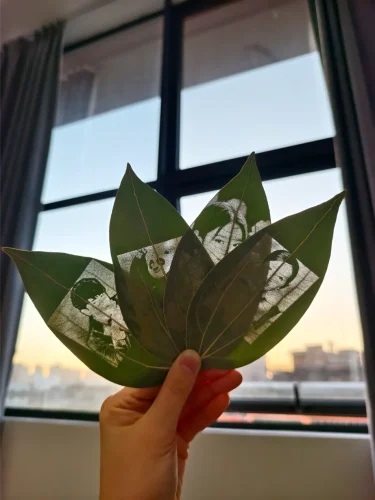
You might be wondering how it is even possible to laser engrave on a leaf. The fact is that you can engrave on leaves, and that’s amazing. Laser engraving leaf is a creative way to turn nature into beautiful art. With the help of a laser machine, you can draw delicate designs on real leaves.
The laser lightly burns the leaf’s surface, leaving patterns, names, or pictures. Laser-engraved leaves are creative and perfect for decoration and gifts. It’s a fun mix of science and nature. Anyone who loves art, school projects, or creative hobbies can try it. Laser engraving on leaves shows how technology can make even the simplest leaf into something truly special.
Understanding Laser Engraving Leaf
Laser engraving leaf is a unique type of engraving. It blends modern technology with nature, resulting in a beautiful decorative product.
Leaf etching is typically done with a highly controlled low-power beam. With subtle control, you can engrave images or texts onto the thin leaf surface. Precise control, in this case, results in high-contrast etching while also preserving its structure. You don’t need to worry about the thin form.
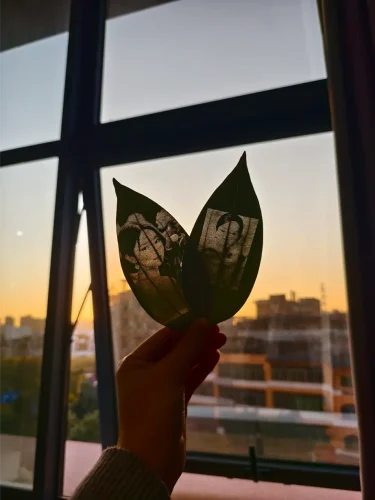
These engraved leaves are used in different programs for decorations. You can decorate events with a distinct, organic touch. You can also use it to personalize items in wedding cards. Write individual guest names on leaves or decorate the table with the etched leaves for a formal dinner. These are some common ideas you can do with it.
Beyond these ideas, laser-engraved leaves are widely popular in the art and craft markets. They are also used for botanical bookmarks. Most people use them to showcase art, poetry, and canvases in laser-engraved leaves.
Best Laser Machine for Leaf Engraving
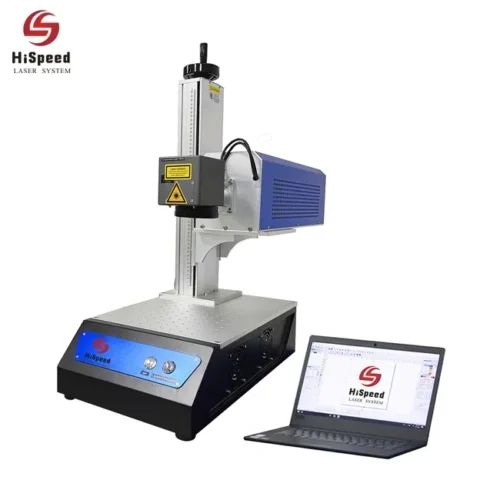
There are various types of laser marking and engraving machines available in the market. Among them, which one should you choose is a big concern. Here, we present our best laser engraving machine for widespread use. The 30W CO2 Laser Marking Machine is a non-metal marking machine. It offers multiple benefits, including the ability to engrave leaves. So, you can call it a leaf engraving machine as well.
The machine’s power ranges from 20W to 100W, the marking area is up to 300×300 mm, and the repeat accuracy is around ±0.01 mm. This leaf laser engraving machine also features an air-cooling system, with an engraving line speed of ≤5000 mm/s. It’s an excellent, well-working, versatile machine with a lot of flexibility.

If you have a small-scale business or are just starting, the Mini máquina de marcação a laser de CO₂ is better for you. This version of the marking machine is generally used with lower power. It applies a 10.64 µm laser beam to the surface for marking. The resolution is high (2540 DPI), with higher accuracy and a stable laser output.
Thus, it makes it suitable for marking paper, greeting cards, wood, bark, and leaves. The marking range is from 110x110mm to 300x300mm with a repeat accuracy of ±0.01mm. This leaf carving machine requires little space, is cost-effective, and is excellent for crafting or small-batch production.
Choosing the Best Leaf Laser Engraving Machine
Not every laser engraving machine can work on organic materials, like leaves. With dried leaves, there is a significant risk of fire. On the other hand, for the live leaves, it’s more critical to get a clean marking. Therefore, choosing the best leaf laser engraving machine matters. Here are some crucial factors that you must consider when choosing one.
Laser Type & Wavelength
A CO2 laser leaf engraving machine is effective for leaf engraving. There are alternative options, such as UV or diode lasers. With a CO2 laser marking machine, 10.6 μm will be a good wavelength. On the other hand, use 355 nm for UV lasers and 450 nm for blue diode lasers. Machine-to-machine, the wavelength varies.
Power Level & Balancing

Another important step is choosing a machine that can operate accurately with lower power. Low power settings like 5W, 15W, and 30W are typically better for engraving thin leaves. Balancing this lower power with a higher scanning speed is critical for the process. In contrast to thick leaves, you may need higher power for etching.
Working Area and Flatness

Leaves are thin, so look for a machine with a flat work bed. Besides, a flat work bed is also crucial for consistent engraving. If you want to work on an individual leaf, a small, flat work bed is enough. On the other hand, a large area is ideal for batch production. So, select a machine according to your work needs.
Focusing and Resolution
The machine you select must offer precise focusing adjustment. This is vital for a thin, uneven leaf surface for a consistent spot. Use a DPI (Dots Per Inch) range of 250 to 400 for better laser passage over the leaf. This resolution ensures fine details, and the etching line is clear.
How to Engrave a Leaf with a Leaf Laser Engraving Machine

Working with leaves is usually not as simple as working with other materials. Indeed, the best outcome depends on how you are engraving it. We recommend you follow the step-by-step guide, especially for beginners.
Choosing the Right Leaves

Before starting the process, choosing the right leaves is crucial. Generally, there are two types of leaves: 1. Fresh leaves, and 2. Dried leaves. Both are preferable for etching. Now the selection depends on your project.
Not all types of leaves are ideal for engraving. Typically, thick leaves such as oak, magnolia, and rubber plant are ideal for etching. These leaves are less likely to tear, making them a durable option.
Magnolia has an excellent contrast with a waxy texture. Thus, it finds application in branding or decorative purposes.
Oak has a sturdy, fibrous surface texture. Compared to magnolia, it has lower durability and is used in botanical collections and framed pieces.
The rubber plant contains leaves similar to magnolia leaves, but is flexible. For this reason, people use them in unique handmade items and rustic wedding decorations.
Fresh vs. dried Leaves
Fresh leaves provide vibrant color contrast, while dried ones give a rustic appearance. Now, let’s know about the advantages and disadvantages of fresh and dried leaves.
| Destaque | Fresh leaves | Dried leaves |
| Contrast | Modest to strong contrast | High contrast, and provides an antique look |
| Durabilidade | Less prone to tearing | Can crack easily |
| Texture | Typically, waxy and fibrous | Fragile, prone to wrinkles |
| Aplicações | Branding, temporary decorations | Gift items, framed artworks |
Size, thickness, and moisture considerations
Leaf size and thickness affect the engraving quality and leaf. Choose a leaf of perfect size that the design can easily fit in without crowding the edges. Also, avoid a skinny leaf shape, as it may burn during engraving or marking. You may use skinny leaves, but in this case, you have to set your machine to a lower power setting.
While thick ones require more power for better engraving, the moisture level is also a crucial factor to consider. Too much wet can scorch, and leaves that are too dry will crumble. Therefore, select a leaf that can be gently pressed flat and has a balanced moisture level.
Preparing for the Laser Engraving Leaf
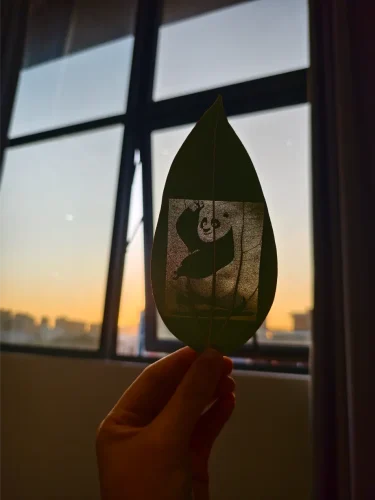
After selection, prepare the leaves before starting the engraving process. Gently clean off the leaf surface with a soft, dry brush or cloth. This step is necessary to remove dirt, dust, or debris from the surface. Otherwise, they may degrade the etching quality, leading to an incorrect design. On the contrary, a clean surface ensures a clean, sharp engraving mark.
If the leaf is not properly flat, you must flatten it before engraving. To flatten a leaf, press it or place it under a heavy book. It is crucial to have a flat leaf. It keeps the laser focal length constant throughout the process and helps maintain a consistent penetration depth across the leaf.
Optimizing Your Laser Settings
To optimize settings, set the power level lower, usually 5% to 15% for a CO2 laser engraver. The engraving leaf is thin. The primary purpose of using lower power is to prevent the engraving leaf from burning or being damaged. As mentioned before, too much power can instantly char the material.
Balance the power with a higher scanning speed. Here, the speed range is 300-500 mm/s for quick passing. The faster the speed you set, the less heat radiation will occur at the spot. Such a combination will minimize the heat damage and result in an elegant etching.
Designing for Natural Canvases
Keep the design simple and ensure it fits on the leaf surface without exceeding the natural boundaries. In this step, avoid placing images or text too close to the edges. Place the design where the leap veins are minimal. Simple text, basic outlines, or high-contrast silhouettes work best on this organic material.
Always align the design with the leaf’s natural shape. Use design software to resize and position your artwork before engraving. Keep your designs simple and small for better precision. Natural canvas works best when you blend creativity with natural beauty.
Main Process of Engraving Leaf
Once the leaf is prepared, secure it firmly to the laser working bed. During engraving, the laser engraving leaf may shake. To prevent shaking, use small pieces of low-tack tape to hold it down. This way, proper securing will help the leaf from movement, which would ruin the design’s alignment.
Before starting, double-check the laser position settings and do a test cut on a small area. It lets you know whether the setting is perfect for the approach. If the settings are ideal, start the process and observe it through. After engraving, allow the leaves to cool down.
Finishing and Preservation
Now, carefully remove the leaf from the laser bed using tweezers or a thin, flat spatula. If it curls, gently press it with a flat paper or a book. Handle gently to avoid tearing delicate, freshly marked material. If there is any residue, lightly brush off the leaf. It helps keep the engraved line clear and visible for a long time.
For long-term preservation, you can provide matte acrylic sealant spray. This spray coating will protect the leaf from moisture and fading. You can now frame the leaf or store it between transparent sheets.
Ready to Create Your Nature-Inspired Art?
Are you ready to create your first laser-engraved leaves? Try out HiSpeed CO2 Laser engravers for the best result. If you need support, our professionals are always happy to assist you.