
When it comes to marking on medical device identification, people typically prefer two methods. These include pad printing and laser marking. However, these two marking methods differ in print quality, durability, and other factors. Distinctions spark debate on pad printing vs laser marking for medical device identification.
As you know, markings and prints on medical devices must be durable. They should not fade over time, which could be dangerous. That’s why choosing the right printing method for these medical markings is crucial. In this article, I will compare pad printing and laser marking to help you choose the right method for marking medical devices. So, let’s get started.
Differences Between Pad Printing and Laser Marking
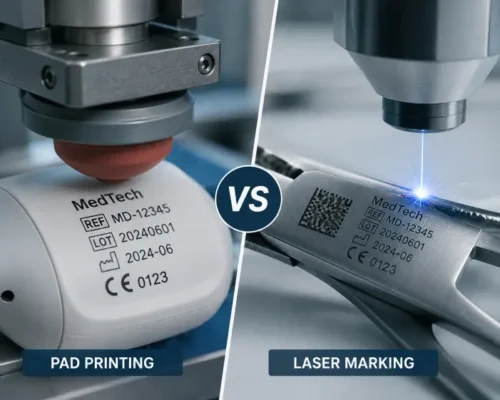
Before discussing, let’s first have a quick overview of how these methods work. Medical device identification means making safety instructions and serial numbers for these devices. These prints help use medical devices more effectively and safely.
Pad printing uses silicone pads for making markings on objects, including medical devices. In this method, silicone pads are used that transfer the ink to the surface of the object for making prints. In contrast, laser marking does not involve ink. This method uses laser marking machines that emit high-power laser beams to etch a design on the product’s surface.
There are different types of laser marking machines available. These include UV laser marking machines, fiber laser marking machines and more. However, all these machines etch on the surface while printing. So the markings on the medical devices are very durable and long-lasting. Pad printing is not the best for print durability.
However, people typically consider marking on medical devices because of its affordability. There are many other differences between pad printing and laser marking. When choosing a printing method for medical devices, it is crucial to consider all these differences. In the section below, I will discuss their differences so you can choose the right marking method.
1- Use of Consumables
Pad printing requires some consumables. These include ink, silicone pads, printing plates, and so on. Before printing, you’ll have to ensure these consumables are in working condition. Once the ink is finished, you’ll have to buy another ink to get printing going. However, laser marking uses no consumables. In this process, the high-energy laser beam etches the surface, leaving markings and prints. That’s why the ongoing cost of laser marking is low, as it uses no consumables.
2- Durability & Longevity of Prints
The prints or markings on medical devices, such as logos and safety instructions, must be durable. If not, these prints will fade away over time. The pad printers apply ink to the surfaces of the medical devices. Due to frequent handling, these prints can fade away. On the other hand, laser marking ensures durable prints. How?
That’s because this method uses a laser beam to etch the surface to make prints. The etched design remains durable and fade-resistant for a long time. In fact, these laser-made markings remain durable even if exposed to UV rays, chemicals, heat, and so on. For durability, you should choose laser marking for printing on medical devices.
3- Sterilization Resistance & Ease of Readability
Sterilization and disinfection of medical equipment, such as syringes, are a must. So, it is essential to choose a marking method that is resistant to sterilization. Laser marking ensures etch patterns and prints on the surface of medical devices. Repeated sterilization does not affect their markings. On the other hand, pad printing involves making prints by using inks and placing them on the surface.
During sterilization, this ink can be washed away or degraded. As a result, the markings can be more faded. Markings made by laser marking machines are durable because they are etched into the material. So, they are superior and easier to read even after years of printing. Pad print markings are easy to read initially. However, these prints fade over time, affecting the sharpness and vibrancy of the pattern.
4- Level of Precision & Color Capabilities
Pad printing is an excellent option for color capabilities. You can print logos, symbols, and other guidelines in different colors using this method. However, this printing method is not ideal for precision. You won’t get ideal markings for micro patterns with fine details. Conversely, laser marking is exceptionally precise. In fact, it can make small details with perfection. However, this marking method cannot make prints in different colors. If you want colorful prints, choose pad printing. For precision, laser marking is the best option among these two.
5- Material Compatibility (Metals, Plastics, Ceramics)
Pad printing has some limitations in material compatibility. This method is effective for marking plastics or rubber. However, when it comes to metals, this method does not give excellent results. You’ll need additional surface treatment on metal to make markings, which could be more costly. Laser marking, on the other hand, can mark almost all types of materials. This is more versatile than pad printing. However, when laser marking plastics, you’ll need to add additives to achieve the best-quality prints.
6- Marking Speed & Automation
Marking speed is an important consideration when choosing between pad printing and laser marking. Pad printing is not a very fast method, which is its drawback. Why? The reason is that this method involves multiple steps. These include preparation of printing plates, ink selection and its setup, drying time, and so on.
These multiple steps slow down the marking speed. On the other hand, modern laser marking machines are more automated. They can create high-quality and precise laser markings in no time. The better automation makes laser marking the best option for bulk products and large workshops. Pad printing is decent for simple designs with a smaller production scale.
7- Setup & Ongoing Cost
Cost is an important factor for most people. Considering the initial and ongoing cost of these marking methods for medical devices is essential. Pad printing is cost-effective initially, which is why it is considered the best starting point. However, the ongoing cost of pad printing is high. You’ll regularly need ink, solvent, printing plates, and so on.
These factors make pad printing more costly in the long run. The laser marking method has a higher initial or upfront cost, which is a significant drawback. However, this method is cost-effective in the long run. It does not require consumables, which makes it more affordable. You can achieve higher-quality output from these laser marking machines. Thanks to their speed and automation.
Conclusion: Which One Should You Choose: Pad Printing or Laser Marking?
In conclusion, both pad printing and laser marking methods are decent options.
I recommend using laser marking to create prints on medical device identification. This method gives durable prints that don’t fade. This means you’ll be able to read the guidelines on medical devices no matter how old they are. Additionally, this method offers excellent sharpness, another significant advantage.
However, if you have a limited budget, you can consider pad printing. However, it won’t give ideal markings, which should be the goal for medical device identification. Before choosing between these methods, you should consider what you want. This analysis will help you choose the right printing methods for your medical devices.