INDUSTRIAL & CUSTOM WOOD GUIDE | HISPEED LASER

Laser Engraving Machine for Wood: Complete Buying and Application Guide

A laser engraving machine directs a high-energy beam of light onto wood surfaces. It burns, marks, or cuts patterns with extreme precision. This guide covers everything you need to know before you purchase one for production use.

Request Wood Sample Test Get OEM/ODM Quote

What Is a Laser Engraving Machine for Wood?

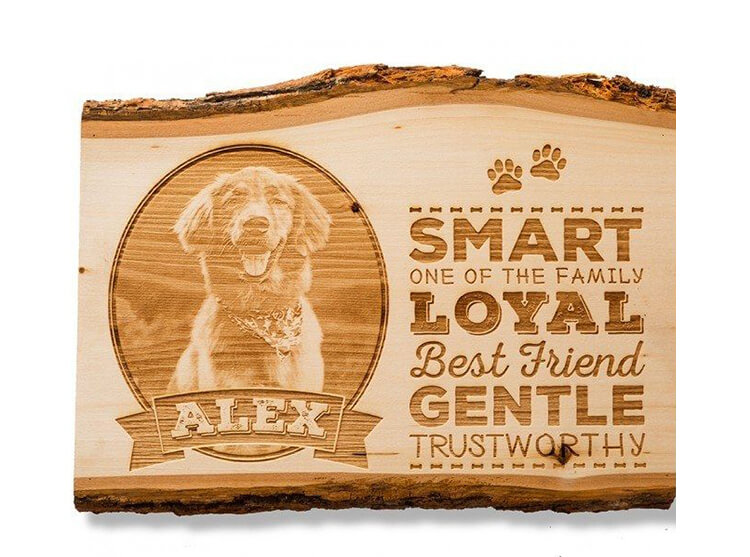
A laser engraver for wood uses focused light to remove or darken material. Common products include signage, cutting boards, decorative panels, awards, and furniture inlays. The machine handles tasks from fine text to deep relief patterns.how these two differ.

close-up_of_a_co2_laser_engraving_machine_cutting_a_detailed_flower_pattern_into_a_wood_board

What separates a laser engraver from a laser cutter?

An engraver marks or removes a shallow layer of wood. A laser cutter penetrates the full thickness. Most modern laser machines combine both modes. You switch between engraving and cutting by adjusting power and speed. Learn more about how these two differ.

HiSpeed Laser designs industrial-grade CO2 and diode laser engravers for wood and other non-metals. Our systems serve production lines, not just hobby desks. This guide targets manufacturers, workshops, and OEM clients. It covers specs, materials, safety, and costs at a production scale.

How Wood Laser Engraving Works

Laser engraving is a thermal process. A focused beam heats wood fibers past their breakdown point. Localized pyrolysis occurs when the concentrated light energy heats the wood. The result? The machine can vaporize or cleanly burn wood fibers at their focal point.

The thermal interaction of the laser with wood can vaporize or darken its surface. The charred finish creates natural contrast against unburned wood. This contrast is what makes text and images pop on light-colored species.

Four Core Parts of Laser Engraving Machine:

Laser source

A CO2 laser tube or diode module that generates the beam.

Motion system

A gantry that moves the laser head across the X and Y axes.

Control software

Processes design files and manages power, speed, and frequency.

Air assist module

Blows air across the cut zone to manage smoke and debris.

Three Processing Modes:

Surface engraving

Shallow removal for artwork or logos.

Laser cutting

Full-depth penetration through the wood.

Light marking: 

Low power at high speed for subtle surface tones.

lesu laser co2 marking machine for wood marking

Parameter Effects:

Different settings change the result.

Higher power or slower speed deepens the engrave.

Lower power at high speed produces lighter marks.

Frequency adjustments affect edge smoothness and char.

Request Sample Test

Advantages of Laser Marking Machine for Wood

Engineered for non-metal materials with high speed, stable output, and low ongoing upkeep.

  • Marking a variety of non-metal materials
  • No consumables, free maintenance (metal tube)
  • Stable performance. zero faults during long-term operation
  • Long lifetime upto 60,000 hours
  • High marking speed, high efficiency, high precision
  • Software with powerful edit function but easy operation
  • Air cooling design, compact structure
laser engraving machine for wood (17)
laser engraver machine for wood
machine that prints on wood
laser printers for wood
machine to engrave wood
engraver machine wood
engraving on wood machine
wood engraving printing

CO2 vs Diode Laser for Wood: Key Differences

The CO2 laser is the industrial workhorse for cutting wood. The diode laser is compact and cost-effective. Both work well on wood. The choice depends on your production needs.

Feature CO2 Laser Diode Laser
Wavelength 10.6 µm (infrared laser / IR laser) 445–455 nm (blue diode laser)
Typical power 40 W–300+ W 5 W–40 W
Wood absorption Excellent Good
Cut depth (single pass) Up to 15–32 mm with high power 3–6 mm on thin wood
Clear acrylic Cuts well Poor results
Metal engraving Not suited (use a fiber laser or UV laser) Not suited
Beam spot size ~0.10–0.18 mm ~0.06–0.08 mm
Maintenance Mirrors, laser tube, cooling system Fewer optics, simpler cooling

Fiber lasers are more suited for metal marking. CO2 lasers excel at wood engraving. A galvo laser can mark anodized aluminum or stainless steel at speed. But for wood, CO2 remains king.

High-efficiency diode lasers provide ultra-concentrated focal points. They also provide razor-sharp marking on thin wood and bamboo. Choose a diode laser engraver when you need compact jigs and low-volume personalization.

Choose a CO2 laser cutter when you need high speed, large format beds, and production-level cutting wood. HiSpeed Laser focuses on CO2 laser systems for wood processing in industrial workflows. We also use diode modules where compact size matters.

Best Wood Types for Laser Engraving and Cutting

Not all woods behave the same under a laser. Some char. Some engrave with sharp contrast. Different wood types yield varied engraving results, affecting shades and contrasts.

Laser systems can cut and engrave many types of wood including plywood and hardwoods. Here are common species and how they perform:

Wood Hardness Color Notes
Maple Hard Light High contrast, clean edges
Walnut Hard Dark Rich tone, slower feed needed
Oak Hard Medium Strong grain, can be uneven
Birch Medium Light Even grain, popular for plywood
Alder Medium Light Smooth engrave, affordable
Basswood Soft Light Responds fast, great for detail
Bamboo Hard Light Clean engrave, eco-friendly
Beech Hard Light Dense, consistent results
MDF Composite Tan No grain, even surface
Plywood Composite Varies Glue layers may char or off-gas
woods for laser engraving

Resin content in softwoods like pine can cause flare or uneven burning. Glue layers in plywood and MDF affect cutting quality. Formaldehyde-based adhesives release toxic fumes under the beam. Use birch plywood with non-toxic glue for best results.

Typical industrial products from these materials include cutting boards, awards, furniture panels, packaging inserts, and decorative inlays.

Request Sample Test

Recommended Wood Laser Engraving & Cutting Machines

30W / 60W RF CO2 Galvo Laser Marking Machine

Best for High-Speed Wood Plaques, Logos & Craftworks

Built with a 10.6 μm RF metal tube CO2 laser source and high-speed digital galvo scanner (up to 5,000 mm/s marking speed, ±0.01 mm repeat precision, standard 300 × 300 mm range). Ideal for permanent logos, barcodes, dates, and fine surface graphics on wood plaques, craftworks, and wooden components where fast marking speed is prioritized over deep through-cutting.

Request a Free Quote

CO2_laser_marking_device_laser_marking_machine_and_laser_engraving_machine
CO2-Non-Metal-Laser-Marking-Machine

100W–300W Coherent RF Metal Tube CO2 Laser Marker & Engraver

Best for Deep Relief Wood Engraving & High-Throughput Branding

Equipped with a Coherent metal RF CO2 laser tube (10.64 μm), high-speed scanning galvanometer (up to 5,000 mm/s, ±0.01 mm repeat precision), and 500 × 500 mm / 800 × 800 mm marking ranges. Engineered for high-throughput branding, deep relief engraving (up to ~5 mm depending on wood density), and continuous 24/7 operation on hardwood, bamboo, woodworks, and craftworks.

Request a Free Quote

LS-1390 130W CO2 Laser Cutting & Engraving Machine for Wood

Best for Full-Sheet Woodworking, Furniture Panels & Contour Cutting

Features a generous 1300 × 900 mm working area, 130W CO2 laser tube, Ruida control system, water-cooling protection, and ±0.05 mm repeat accuracy. Designed for full-sheet woodworking, MDF/density board, bamboo, signage, furniture panels, and decorative parts requiring clean contour cutting and large-format engraving.

Request a Free Quote

CO2_Laser_Wood_Cutting_Machine

Core Applications of Wood Laser Engravers in Manufacturing

In a B2B context, laser engraving goes beyond art projects. It supports batch production, OEM branding, and contract manufacturing.

Traceability and branding:

Companies engrave logos, serial numbers, and QR codes on wooden parts. A cutting board manufacturer, for example, marks each board for warranty and origin tracking. Explore laser engraved cutting board ideas for inspiration.

Signage and displays:

Hotels, museums, and retail stores use custom wood signs. Relief engraving on wood panels creates high-value visual displays.

Furniture and décor:

Laser engraving can achieve intricate designs, which are hard to replicate by hand. Fine patterns on doors, drawer faces, and decorative panels replace older mechanical tools. Laser cutting technology enables precise cuts in wood materials. Laser cutters achieve intricate designs with minimal waste.

Laser engraving is a non-contact process that prevents warping of delicate wooden pieces. Precision and detail in laser engraving allow for intricate designs and high-resolution images. These traits make laser machines ideal for jewelry boxes, toys, giftware, and paper-thin veneers.

Request a Free Quote

Key Specifications to Check Before You Buy

Specs drive throughput and quality on a factory floor. Here is what to evaluate.

Laser Power

CO2 laser cutters for wood range from 40 W to 300+ W.

  • 40 W: prototyping, thin wood, light engraving.
  • 60–100 W: 6–12 mm sheets, signage, mid-volume production.
  • 150–300 W: thick solid wood (20–30 mm), large format cutting, high throughput.

Working Area

Full-sheet wood (1200 × 2400 mm) demands a large bed. For smaller parts, a 600 × 400 mm or 900 × 600 mm bed works. Some machines allow oversized projects through pass-through or open frame lasers.

Motion speed and accuracy

Engraving speeds reach 300–600 mm/s on modern equipment. Positioning accuracy better than 0.1 mm keeps designs sharp. Repeatability matters for batch runs of identical parts.

Safety features

Look for enclosures with interlocks, emergency stop buttons, and an exhaust port for fume extraction. Included safety goggles matched to the laser wavelength protect operators during alignment.

High-power laser engravers can cut through thick wood substrates. Select the right laser power based on your thickest material and speed needs. We can help you choose a suitable laser system.

Process Parameters: Dialing in Settings for Wood

Here are practical ranges, not vague advice. Every wood species needs a test grid first. But these starting points save time.

General pattern:

Light marking

Low power, high speed, single pass.

Deep engraving

Moderate power, moderate speed, 1–2 passes.

Full cutting

High power, slow speed, sometimes multiple passes.

Cutting thickness examples (CO2 laser):

Thickness Power needed Passes Notes
3 mm plywood 40–60 W 1 Clean single pass
6 mm solid wood 60–80 W 1–2 Air assist helps edge quality
10–15 mm 100+ W 2–3 Multi-pass improves kerf
A_laser_cutting_machine_with_air_assist_cutting_through_a_piece_of_plywood_on_a_honeycomb_working_bed

Laser cutting has minimal material waste due to narrow kerf width. Laser cutting technology reduces edge charring in wood projects when air assist and correct focus combine.

Focus position matters. A short focal length produces finer kerf but limits depth. A longer lens reaches deeper into thick stock. Dirty lenses scatter energy and widen the cut. Keep optics clean.

For detailed laser cutter settings for different materials, check our parameter reference guide. HiSpeed Laser application engineers can also provide starting parameter tables for your specific woods.

Verify Material Safety

The Role of Air Assist and Exhaust in Wood Processing

Smoke, resin, and char are constant challenges when cutting wood. They stain surfaces, contaminate lenses, and reduce engraving quality.

Air assist

Air assist blows a stream of air across the beam path. Air assist improves engraving quality by blowing away smoke and debris. It reduces flare-ups and keeps the lens clean. Without it, resin deposits build up fast on CO2 optics.

Fume extraction

A smoke purifier or fume extraction system is just as important. Proper exhaust removes particles and VOCs from the workspace. MDF and plywood release formaldehyde-based fumes. Multi-stage filters (particulate plus activated carbon) handle these.

HiSpeed Laser offers integrated air assist options. Our machines include interfaces for external blowers and dust collectors. This keeps your production line clean and compliant.

Request a Free Quote

Beginner-Friendly vs Industrial Wood Laser Systems

Desktop laser cutters and industrial systems serve different users.

Dimension Beginner-Friendly & Desktop Systems Industrial Wood Laser Systems
Target Users & Use Cases Small business use, education, and light prototyping. 24/7 factory production lines, contract shops, and OEM manufacturing.
Typical Models & Setup Simple setup and intuitive software—such as Twotrees TS5 7W, TS2 20W Kit, TTS-20 20W, portable TS1 Mini (mobile production), and TS3-series. Rigid heavy-duty steel frames built for continuous industrial duty cycles.
Motion & Processing Compact desktop frames suited for lighter substrates and short runs (see our roundup of the best laser engraving machines for wood). Servo-driven motion for high speed, deep cutting, and batch repeatability.
Workflow & Software Out-of-the-box standalone operation for individual pieces. Automated workflows, conveyor tables, custom jigs, and proprietary software with MES/ERP integration.
Safety & Enclosure Open-frame designs or compact enclosures with basic air filtration (e.g., TS3-series). Full industrial safety enclosures with door interlocks and factory exhaust integration.

Where HiSpeed Laser Fits: HiSpeed Laser systems serve OEM production lines, contract shops, and educational labs. We handle various materials beyond wood, including acrylic, leather, glass, and plastic.

Request a Free Quote

Design Workflow: From CAD File to Engraved Wood

The laser engraver is the last step in a digital workflow. The design process starts on a computer screen.

Common design tools include CorelDRAW, Adobe Illustrator, and AutoCAD. Typical file formats are DXF, AI, PDF, and SVG. Digital design software translates artwork into coordinates and power levels for laser guidance.

Digital vector files enable consistent engraving results across multiple items. This repeatability is critical for batch production. One file runs hundreds of identical parts.

The workflow steps:

  • Create or import your design file.
  • Open it in the laser control software.
  • Set power, speed, and mode (raster engrave or vector cut).
  • Position the artwork on the virtual bed layout.
  • Run a test piece, then start production.
laser engraving machine for jewelry (2)

HiSpeed Laser systems work with popular control platforms. We also offer custom software integration for OEM clients who need MES or ERP connectivity.

Maintenance and Operating Costs for Wood Laser Engravers

Stable quality and uptime depend on regular maintenance. A laser beam maintains its cutting quality indefinitely without wear, but the optics and mechanical parts around it do wear.

Routine Maintenance Tasks

  • Every shift: Clean lenses and mirrors.
  • Weekly: Clear the nozzle and air assist lines.
  • On schedule: Replace exhaust filters.
  • Monthly: Check belts, rails, and optical alignment.
  • Ongoing: Monitor CO2 laser tube output power over time.

Main Operating Cost Items

  • Utilities: Electricity for laser, motion, cooling, and exhaust.
  • Consumables: Lenses, mirrors, nozzles, and exhaust filters.
  • Major component: CO2 tube replacement at regular intervals.
  • Operations: Operator labor and training.

CO2 Laser Tube Life & Spare Parts Support: Glass CO2 tubes last several thousand hours. Output power drops as the tube ages. When engraving depth fades or cut speed slows, the tube needs replacement. This is the biggest single cost item for CO2 systems. HiSpeed Laser supplies original spare parts and global after-sales support contracts so fast parts availability minimizes downtime.

Get Maintenance Support

Safety and Environmental Considerations

Safety affects compliance for export markets and shared workspaces. The cooling and ventilation of laser systems are critical for safety during operation.

Hazards of laser cutting wood:

⚠️ Fumes and fine dust from burning fibers.
⚠️ Fire risk from resin ignition or char buildup.
⚠️ Eye exposure to the laser beam (IR laser or visible light).
⚠️ VOC release from composite wood adhesives.

Best practices:

✅ Use enclosed laser cutters. They ensure a safe workshop environment.

✅ Install interlocks that cut power when doors open.

✅ Wear certified goggles matched to the beam wavelength.

✅ Add fire sensors near the cutting bed.

✅ Never leave the engraving machine unattended while cutting.

Relevant standards include CE marking in Europe, IEC 60825-1, and ANSI Z136.1 in North America. Read our laser safety guide for a deeper look.

Proper filtration supports cleaner production lines. Carbon filters remove odor. HEPA filters catch fine particles. Together, they reduce workplace exposure and meet emission regulations.

Discuss Compliance & Safety

HiSpeed Laser Wood Engraving Solutions

Customized laser solutions are sought after by manufacturing companies across various sectors. HiSpeed Laser delivers them.

Typical Configuration

CO2 laser cutters for wood. Our CO2 laser engraving machines handle wood sheets, signage blanks, and furniture panels. Power ranges span 40 W to 150+ W. Bed sizes start at 400 × 600 mm and scale to 1300 × 900 mm or larger. The 1390 CO2 laser engraving machine is a popular mid-format option.

Mixed-use systems

One platform processes wood, acrylic, leather, glass, paper, and some plastics. This reduces equipment count and floor space.

Customization Options

We build custom machine footprints, conveyor tables, rotary fixtures, and integration modules for existing production cells.

Global Support

HiSpeed Laser provides remote diagnostics, on-site commissioning, and regional engineering support. We ship other lasers and spare parts worldwide.

Use Cases and Case Study Ideas

Here are concrete examples that show how wood laser engraving works at scale.

Furniture factory, Southeast Asia (2023)

A door manufacturer switched from CNC routers to CO2 laser cutters. The goal was finer pattern cutting on oak door panels. Laser cutting reduced tool changeover time to zero. Edge quality improved on curves and tight corners. Production throughput increased by 30%.

Cutting board producer, China (2024)

A bamboo cutting board manufacturer engraves logos and QR codes for European export. Each board carries a traceable mark. The laser runs 16 hours per day on a conveyor-fed CO2 system. Batch consistency stays within 0.05 mm.

University makerspace, North America (2025)

A medium-power laser cutter trains engineering students. Projects range from wood engraving to laser cutting acrylic and leather. Students use it to create prototypes, art pieces, and functional tools. The machine doubles as equipment for faculty research.

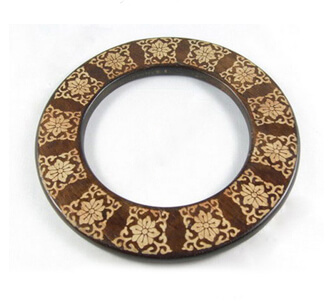
custom-wooden_cutting_boards_with_intricate_floral_borders_engraved_by_a_co2_laser_machine

Contact HiSpeed Laser for feasibility tests on your own wood samples before purchase. We run trial cuts and engraves so you see results before you commit.

Request a Feasibility Test

How to Choose and Next Steps with HiSpeed Laser

5 decisions to pick the right laser engraver

  • Material mix: What wood species and composites will you process? Will you also cut acrylic, leather, or other different materials?
  • Thickness: Your thickest wood dictates minimum laser power.
  • Throughput: Parts per hour and shift length set the duty cycle.
  • Budget: Balance regular price against operating cost and ROI timeline.
  • Automation: Do you need conveyor feeding, vision alignment, or ERP integration?

6 Typical engagement flow:

  • You submit an inquiry with drawings, wood specs, and target output.
  • We run sample testing on your materials.
  • We deliver a detailed proposal with machine specs and pricing.
  • OEM customization (if needed) follows your approval.
  • Machine production, shipping, and commissioning.
  • After-sales plan with spare parts, training, and remote support.

HiSpeed Laser’s sales engineers run a requirement analysis for every inquiry. We recommend a matching CO2 or diode laser solution based on your answers.

Ready to Optimize Your Wood Production?

Send us your wood types, part drawings, and volume targets. HiSpeed Laser will design a tailored laser engraving solution that fits your production line – not just your workshop.

Send Wood Samples & Get Quote