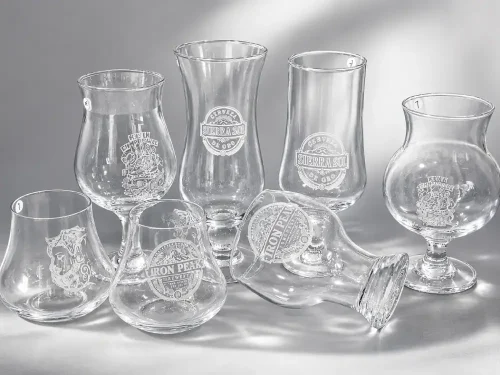
Etching on glass has always been a challenging task. As you know, it’s delicate, and you need high-precision tools to get accurate results. Traditional methods take time and require complex processes. There is also a high risk of material damage. These problems eventually make the work expensive. In the modern world, a laser glass etching machine solves all these problems.
Today, we will talk about what a laser glass etching machine is. We will introduce a few key factors to consider when choosing the right laser for glass engraving.
How Does Laser Engraving for Glass Work?
Laser engraving for glass is a popular method for marking various types of glass using a high-powered laser. It can meet a wide range of marking needs, such as engraving logos, text, and patterns. Another advantage is that it does not require ink or other consumables, which can add extra cost. Since the laser does not make direct contact with the material surface, the material remains safe. This practice makes it an ideal option for drinkware, bottles, and awards.
When the laser contacts the material, it delivers a high-energy pulse to the surface. The glass absorbs this energy and heats up rapidly. Later, the heat causes tiny cracks in the glass surface, which scatter light and appear as a frosted white mark. The machine controls the beam path according to the design, creating a lasting mark.
Laser-engraved glass has multiple applications. Many brands use laser engraving to create logos and designs on mirrors, drinkware, and bottles. Shops use glass etching machines to engrave trophies, awards, and other items. Factories mark their products with barcodes and serial numbers. Gift makers create 3D designs on gift items. Overall, it serves different needs in many sectors.
What Type of Laser Engraving Machine Can Etch Glass?
Various laser etching methods are available on the market. Not every laser can work on glass. The right choice matters a lot for clean results. The two most common machines used for glass are CO2 laser glass etching machines and diode laser glass etching machines. Each one has particular strengths and limitations. Let’s look at how each method performs on glass.
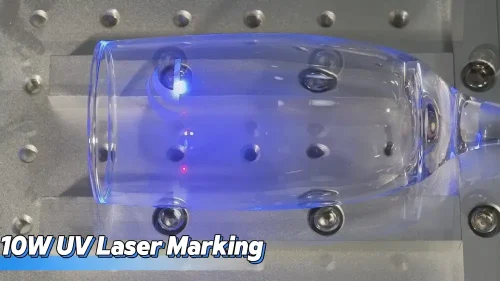
CO2 Laser
A CO2 glass laser engraver uses a gas mixture to produce a powerful light beam. The resulting wavelength is approximately 10.6 micrometers, which glass absorbs very efficiently. When the light beam strikes the surface, it creates a frosted white mark with each use. For this reason, manufacturers mostly prefer CO2 laser engraving machines for glass etching. It always delivers sharp, clean results.
Apart from glass, the CO2 glass-etching machine is highly versatile. It supports working on a wide variety of materials. You can use it to engrave wood, stone, leather, paper, and fabric. Ceramic and rubber are also popular use cases. You can also mark coated and anodized metals. One machine can serve different purposes as needed, including fine glass etching.
Diode Laser
A diode laser engraving machine uses a semiconductor chip to generate a light beam for glass engraving. Most models generate blue light beams around 450 nanometers. These machines are comparatively small, lightweight, and low-cost. They also require little maintenance. These advantages make them a suitable option for hobbyists and small business owners.
Diode laser engravers also support a variety of materials. Examples include wood, leather, dark acrylic, and paper. They can also mark coated metals. But the laser struggles to mark clear glass. Its blue light beam passes directly through the clear glass. As a result, it cannot etch it properly. This problem is resolved by using a dark coating or marking spray. The beam then heats the coating, leaving a clear mark.
Key Features to Consider Before Buying a Laser Etching Machine for Glass
Buying a glass laser-etching machine is one of the most important decisions. The right choice delivers the outcomes you expect with precise settings. Some machines can’t mark glass. So, the wrong choice wastes money and drives up costs. Before buying a machine, check a few factors. Each one affects quality, speed, and long-term cost.
Laser Wavelength
Wavelength matters most in glass-etching methods. Generally, it determines how the glass reacts when it comes into contact with the light beam. glass absorbs the 10.6-micrometer CO2 laser beam perfectly. It also responds well to UV light at 355 nanometers. But with a fiber laser or blue diode laser, the beam passes directly through the surface. The right choice affects the quality of the product you get.
Power Output
Power output controls engraving speed and depth. A 30- to 60-watt CO2 glass laser engraver works best on almost every type of glass. But UV laser engravers for glass use less power, often 3 to 10 watts. Higher power lets you cut materials faster. Using too much power can also damage the glass. Always choose a machine with adjustable power so you can control the overall output more precisely.
Spot Precision
Spot size matters a lot for precision and detailed engraving. It determines the etching quality. Using a smaller spot size produces sharper, clearer text. Therefore, check which spot size you need for optimal results. For bold designs, a CO2 glass engraving machine is a good option. Before buying a machine, always ask for a sample engraving. Check the line and edge quality yourself before deciding.
Working Area
The working area indicates the space you want to mark on a material. Small-area work suits are perfect for bottles and cups. But large-area work suits larger glass panels and mirror work. Many devices support a rotary system for marking curved or round glass materials. It rotates the glass while marking. This component enables many business ideas across a wide range of products.
Sofware Control
Good software makes your daily work much easier and is easy to use. Therefore, look for software with a clear layout and simple tools. It should support importing common file types like JPG, SVG, PNG, DXF, and more, depending on your needs. It should also include preview and positioning tools to reduce glass-etching errors. Some software may support batch jobs. Check software updates and language, too, since they matter. Overall, choose software your team can learn in a few days.
Cooling System
Laser glass etching machines generate heat during engraving. Cooling plays a vital role here. It helps keep the laser stable and keeps both the machine and the operator safe. Generally, a high-power CO2 laser marking machine for glass requires a water chiller to keep the system cool. But lower-power machines use an air-cooling system. Using a poor cooling system can cause uneven marks and shorten the tube’s lifespan. Good cooling systems safeguard your investment and keep results consistent.
Maintenance Support
Every laser needs proper maintenance and care. Ask the manufacturer which parts may wear out and how often. Check whether spare parts are easy to get. Consider the warranty length and look for training and fast service. Strong manufacturer support reduces downtime. Downtime often costs you money and delays your project.
Safety Features
Laser beams can easily harm the operator’s eyes, the inhalation system, or skin. Engraving glass also produces tiny particles, dust, and fumes. For this reason, choose a closed enclosure with an emergency stop button. Good ventilation and fume extraction are also crucial steps to prevent these types of harm. Check for standard safety certifications like CE, and wear all protective gear before starting engraving. This practice protects your staff and your business reputation.
Budget
Set a fixed budget before buying a glass laser marking machine. A CO2 machine costs less than a UV laser engraving machine. When budgeting, include all necessary costs. Consider shipping, cooling, ventilation, and training. Besides, include spare parts and power output. Compare all costs, not just the machine’s price tag. Then buy a machine that suits your budget and project requirements.
Best Laser Etching Machine for Glass
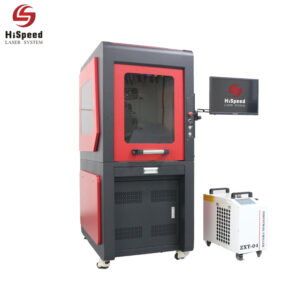
The Hispeed Laser Drilling Machine is an advanced tool that uses a JPT M8 MOPA fiber laser. Its power typically ranges from 100W to 250W. The M8 source delivers high peak power with strong energy pulses. With it, you can easily drill and cut glass without cracking or causing problems. The laser source lasts up to 70,000 hours. It also features a water-cooling system to ensure stable performance on every cycle. No extra consumables are needed.
This high-speed laser engraving machine is highly versatile. It can work on more than glass. You can reliably use it on LCD screens, thin ceramics, and silicon chips. It also serves the solar and new energy industries, depending on the application. Furthermore, the software is easy to use and includes lifelong after-sales support. Its high precision and fast etching speed make it a popular option across industries, including glass.
Conclusion
Choosing a laser engraver for glass depends heavily on selecting the right laser source for high-quality etching. The beam must match the material; otherwise, engraving may fail. Many types of laser glass etching machines are available now. Choose the right one based on your requirements. Don’t rush your choice.
Consider your needs, including power, cooling, precision, safety, and customer support. Set a fixed budget and request a sample test to confirm it meets your needs.
If you have further queries, feel free to contact us. Our friendly team is always ready to assist you with accurate guidance.