
Product Identification & Traceability
Laser technology marks clear and permanent IDs on component surfaces. This supports single-piece coding, batch management, production records, and quality tracking. It creates a strong traceability foundation for industrial manufacturing.
Identifiable Information Content
- Serial numbers, batch numbers, part numbers, and production dates
- Data Matrix codes, QR codes, and barcodes
- Logos, specifications, and product identification information
- Automatically incrementing numbers and other variable data
- Rapid switching of marking content based on production requirements
Traceability & Production Line Integration
- Links unique codes with parts, batches, and production records
- Supports integration with vision systems for positioning and code reading verification
- Enables data exchange with production systems such as PLCs, MES, or ERP
- Integrates with sensors, encoders, conveyor lines, and automated workstations
- Facilitates information tracking across production, quality inspection, assembly, and after-sales stages
Laser Processing Technology for Precision Components
Select an appropriate processing method based on the component material, target depth, contrast, heat-affected zone, and production mode.
Part Identification and Traceability
Serial numbers, Data Matrix codes, QR codes, barcodes, part numbers, and logos are directly marked onto part surfaces for product identification and traceability.
Precision Engraving and Deep Engraving
Controlled material removal for molds, tooling, cutting tools, nameplates, and wear-resistant markings requiring specific machining depths.
3D and Curved Surface Marking
Dynamic focusing compensates for height differences, enabling processing on curved surfaces, stepped surfaces, and irregular structures while reducing the need for repeated manual focusing.
Laser Welding
Localized joining of small metal components—such as sensors, terminals, housings, and brackets—with heat input controlled through optimized parameters.
Laser Cleaning
A non-contact cleaning method that uses laser technology. It effectively removes rust, oxide layers, oil, and some coatings from component surfaces.
CCD Vision Recognition / Fly Marking
CCD vision systems can be integrated to identify part orientation or features, while sensors and encoders enable synchronization with motion for on-the-fly marking.
Laser marking of Various Precision Industrial Components
Automotive and New Energy Vehicle Components
Electronic and Electrical Components
Mechanical and Hardware Parts
Molds, Cutting Tools, and Tooling
Bearings, Gears, and Shaft Components
Hydraulic and Pneumatic Components
Connectors, Terminals, and Sensors
Medical Device Components
Energy and Power Equipment Components
The Value of Laser Marking in Production Lines
Permanent, Direct Marking
The mark is applied directly to the part surface, eliminating the need for separate labels; ultimate durability depends on the material, process, and post-processing methods.
Non-contact Processing
No mechanical impact or tool contact; suitable for small, thin-walled, and precision-machined parts.
Flexible Variable Content
Serial numbers, batch information, codes, and graphics can be switched via software, eliminating the need for frequent mold or printing plate changes.
Suitable for Automated Integration
Can be integrated with sensors, encoders, vision systems, motion axes, fixtures, conveyor lines, and robotic cells depending on project requirements.
Reduced Consumables
Compared to ink or label-based marking, laser marking reduces the need for recurring consumable purchases and changeover tasks.
Facilitates Process Standardization
Once the process is validated and the optimal operating window established, parameter recipes can be saved to ensure consistent, repeatable production across different batches.
Industrial Manufacturing and Precision Component Sample Showcase
Actual samples provide a visual demonstration of processing results—including laser marking, welding, cleaning, and CCD vision/on-the-fly marking—applied to industrial components.

Laser Marking

Laser Marking

Laser Marking
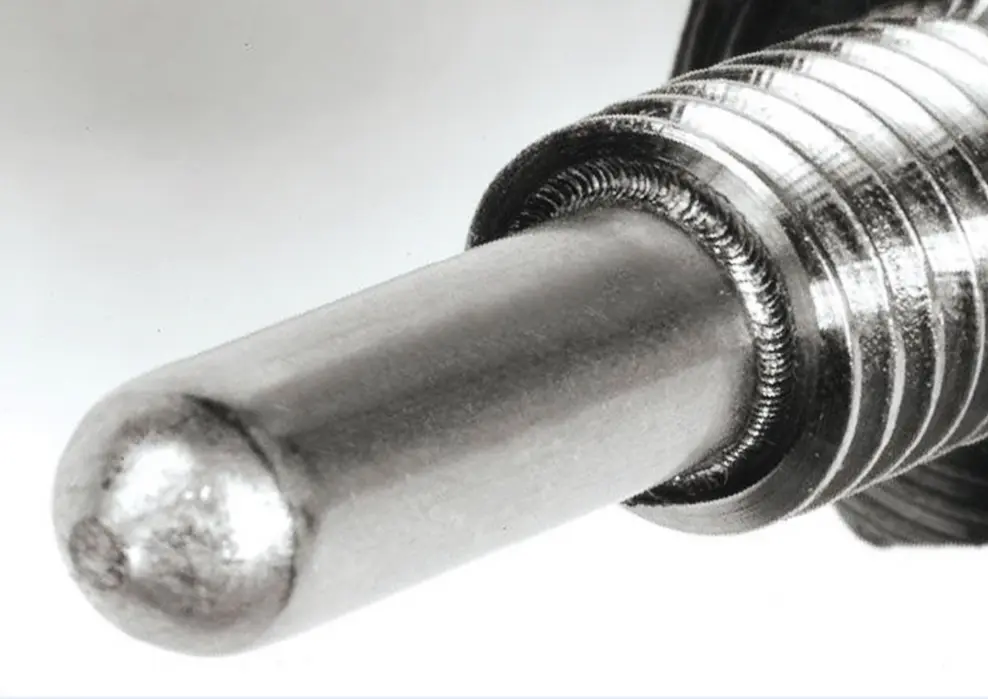
Laser Welding

Laser Cleaning

CCD Vision-Based On-the-Fly Marking
Hispeedlaser’s Laser Machines for Industrial Manufacturing
Our laser machines cover component marking, 3D surface processing, vision-guided/on-the-fly processing, laser welding, and laser cleaning. We also offer expanded automation integration capabilities tailored to specific production methods.

Fiber Laser Marking Machine
Suitable for general-purpose marking and engraving on a wide range of metals. capable of processing serial numbers, Data Matrix codes, QR codes, logos, and other variable production data.

UV Laser Marking Machine
Suitable for precision marking on a wide range of plastics and heat-sensitive components; it offers distinct advantages for applications requiring a small spot size and minimal heat-affected zone.

3D Laser Marking Machine
Suitable for dynamic-focus processing of curved surfaces, stepped surfaces, and irregular parts, overcoming the focusing range limitations of traditional flat-field lenses.

CCD Vision / Online Fly-Marking Machine
Supports CCD vision-based positioning and recognition as well as online fly-marking, enabling flexible and stable automated marking based on part position, orientation, or production line speed.

Laser Welding Machine
Suitable for the laser welding of precision metal components; fixtures, workstations, and automation solutions can be configured based on component structure, welding location, and production cycle requirements.

Laser Cleaning Machine
Used to remove rust, oxide layers, oil, and certain coatings from the surfaces of metal parts; suitable for component maintenance, pre-weld cleaning, and localized surface treatment.
From Sample Testing to Stable Mass Production
For precision components, validating the finishing process before choosing equipment reduces project risks. It also helps in accurately determining the final setup.
Part and Requirement Specifications
Please provide material details, drawings or photographs, marking content, target cycle time, and the actual production method.
Sample Testing and Process Evaluation
Use actual parts to test contrast, depth, heat-affected zones, readability, and processing time.
Equipment and Integration Solutions
Lasers, optical systems, motion mechanisms, fixtures, vision systems, safety enclosures, and automation configurations are matched to the specific application.
Validation and Mass Production Delivery
Finalize the process, operating procedures, and production configuration prior to delivery, ensuring readiness for the subsequent transition to mass production.
Do You Have Precision Components That Require Marking, Engraving, Welding, Or Cleaning?
Send us the material details, photos or drawings of the parts, marking specifications, and target cycle times. We can conduct sample testing first and then recommend the appropriate laser solution based on the actual results.