
Welding is a crucial task in various modern applications. It is used across various industries, including automotive, aerospace, construction, and electronics. However, there are two primary types of welding: Laser Welding and TIG welding.
They both differentiate based on numerous features, such as precision, accuracy, speed, and automation. But which one stands out? Today, we will compare both types of welding and determine which is more important!!
What is Laser Welding?
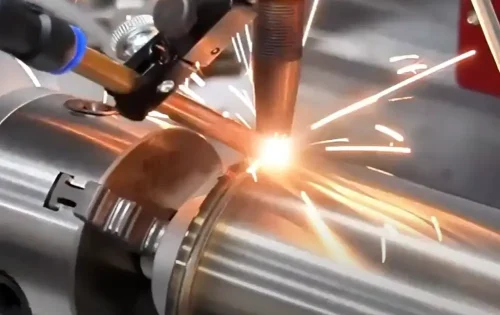
Laser welding uses a highly focused laser beam to join the ends of the metals. It melts the metals and engages the end. Due to laser speed and accuracy, this process is fast and more accurate, with the following prominent features:
- Non-contact process
- High energy concentration
- Ideal for automation and robotics
- Produces narrow weld seams
This is why laser welding is used across industries such as automotive manufacturing, electronics, medical devices, and aerospace.
What is TIG Welding?
TIG welding refers to the Gas Tungsten Arc Welding process. In this process, tungsten electrodes produce high-energy arcs that melt the metal ends and join them as needed.
The primary features of TIG welding include:
- Uses shielding gas (usually argon)
- Can use filler material if needed
- Offers excellent control over weld quality
- Highly versatile for different materials
TIG welding is commonly used in the following applications.
- Fabrication shops
- Repair work
- Pipelines
- Custom manufacturing
Differences between Laser and TIG welding
Laser and TIG welding are two completely different processes with the same goal. They use different machinery and have unique efficiency. Let’s understand the key differences between them.
| Feature | Laser Welding | TIG Welding |
| Process Type | Non-contact (laser beam) | Arc welding (tungsten electrode) |
| Speed | Very fast (3–5x faster) | Slower |
| Precision | Extremely high | High (manual dependent) |
| Heat Affected Zone | Very small | Larger |
| Weld Quality | Strong, consistent, automated | Excellent finish, manual control |
| Material Thickness | Best for thin to medium (<6mm) | Suitable for thin to thick materials |
| Automation | Highly automated | Mostly manual |
| Equipment Cost | High initial cost | Lower initial cost |
| Skill Requirement | Low to moderate | High (skilled welder needed) |
| Flexibility | Low (needs precise fit-up) | High (handles gaps, irregular shapes) |
| Best Use Case | Mass production, automation | Custom work, repair, fabrication |
Speed and Productivity
Speed is essential for high productivity in the industrial zones. Businesses have to meet the number of orders. Let’s compare speed first.
Laser welding is highly fast and impactful. Due to precise control and automation, it welds 3-5 times faster compared to other types.
TIG welding is slower due to manual control and arc-based processes. Therefore, it has less speed.
Precision and Heat Input
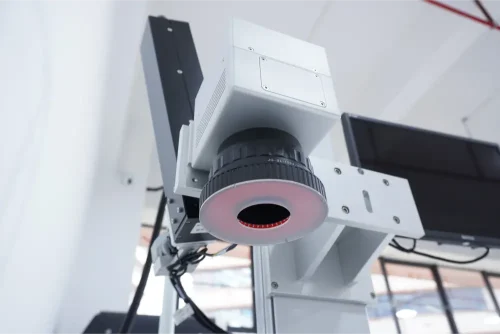
Consistent output and product quality are crucial for the industrial sector. Therefore, most industries prefer welding processes with high precision.
In this case, laser welding is already one of the most precise solutions. It has a very narrow heat-affected zone and provides minimal heat distortion.
Compared to it, TIG welding can be precise, but not as precise as laser welding. Moreover, it has a wider heat-affected zone and has a greater risk of distortion in thin materials.
Weld Quality and Strength
Ultimately, the goal is to weld with high-end systems and achieve high-quality results. Both methods are highly recommended for a strong welding process, but differ in the features discussed below.
Laser Welding offers:
- Fine microstructure due to rapid cooling
- High strength and toughness
- Lower risk of defects in automated setups
TIG Welding offers:
- Excellent surface finish
- Superior control for aesthetic welds
- Preferred for high-quality manual work
Material Compatibility
Welding materials differ. For example, you might have to weld different materials, such as aluminum, titanium, or sometimes steel.
Let’s compare both types.
Laser welding is suitable for mild to medium-thick materials with thicknesses less than 6mm. It is an ideal choice for stainless steel, aluminum, titanium, and dissimilar metals.
On the other hand, TIG welding offers greater flexibility in material thickness. It is also suitable for exotic and reactive metals.
Automation and Scalability
Do you produce products with an automated system? Welding is differentiated based on the automation methods used.
Laser welding is already famous for its automated welding tasks and high accuracy. In the production process, it increases efficiency and helps scale the business faster with the modern system.
Compared to it, TIG welding is difficult to automate and relies mostly on manually skilled workers. It offers good efficiency but requires more time.
Equipment Cost and Investment
Depending on the equipment, automation, and work efficiency, costs might range from upfront to long-term.
For example, laser welding has high upfront costs and offers automation. Looking at the long term, it is beneficial for your business.
While TIG welding is a cheaper, more affordable solution at first, it doesn’t automate the process and provides fewer benefits in the long run.
Ease of Use and Skill Requirements
Ease of use depends on the mechanism of operation. Laser welding is a plug-and-play system that requires the proper input and provides accurate results. There is a lower likelihood that a skilled worker will be needed.
However, TIG welding relies on manual labor. Therefore, it appears to require more effort from a skilled worker and a difficult learning curve.
Flexibility and Joint Tolerance
The laser is less flexible and sensitive to joint gaps. If you want to join two edges of a metal, you must place them at precise distances.
On the other hand, TIG welding is more flexible and provides easier welding on irregular surfaces. There are fewer restrictions.
Which one is better?
Each welding type has unique features and is suited to different processes. It even has different skilled laborers. You should consider both types in the following conditions.
Choose Laser Welding If:
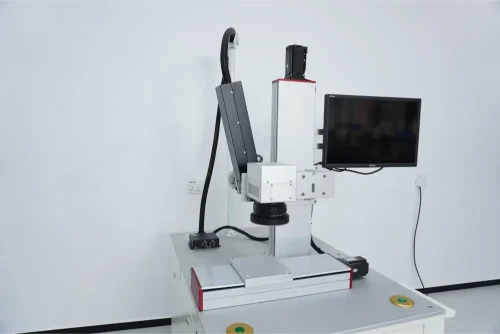
- You need high-speed production
- You operate in automated manufacturing
- You work with thin materials
- Precision and repeatability are critical
Choose TIG Welding If:
- You need versatility and flexibility
- You work with thick or complex materials
- You handle low-volume or custom jobs
- Skilled labor is available
Conclusion
Both types of welding have a few unique features and offer excellent work efficiency. However, laser welding is suitable for automated tasks that require high efficiency and speed. TIG welding is the best option for straightforward tasks with unmatched flexibility, control, and versatility.
Do you want high-quality laser welding machines? Contact HiSpeed Laser Manufacturers. We have peerless laser welding machines with affordable costs and excellent work efficiency. Contact our experts right away!