

As manufacturers continue to demand higher precision, clearer identification, and more permanent marking results, UV laser marking is becoming an increasingly important solution across many industries.
Compared with traditional inkjet coding, printing, or laser processes with higher thermal impact, UV laser marking offers a shorter wavelength, a smaller heat-affected area, and finer processing capability. This makes it suitable for plastics, glass, electronic components, medical products, packaging, and other materials that require clean and stable marking results.
In 2026, UV laser marking is no longer limited to precision marking applications. It is expanding into automated production, product traceability, anti-counterfeiting, and high-value customized manufacturing.
Why Is UV Laser Marking Demand Growing?
UV lasers typically use a 355nm wavelength and are often considered a “cold marking” technology. For materials that are sensitive to heat, deformation, discoloration, burning, or rough edges, UV laser marking can create finer, clearer, and more stable results.
In real production, many manufacturers choose UV laser marking to solve problems such as:
- Yellowing, burning, or unclear edges on plastic materials
- The need for fine marking on glass without obvious cracks
- Small electronic components that require high-precision characters, QR codes, and traceability codes
- Medical and packaging products that require permanent and clear identification
- Production lines that need a more stable, consumable-free, and automation-friendly marking process
For these applications, UV laser marking is not only about whether the mark can be made, but also whether the marking quality can remain consistent in batch production.
Main UV Laser Power Options
Different UV laser powers are suitable for different materials, marking speeds, and marking effects.
In the past, 3W UV lasers were sometimes used for entry-level precision marking applications. However, for most industrial production needs today, 3W is often not powerful enough in terms of marking efficiency, material compatibility, and batch production stability.
That is why 5W is usually a more practical starting point for real industrial applications. It provides a better balance between marking fineness, speed, and application range, making it more suitable for most daily production requirements.
Common recommended UV laser power options include 5W, 10W, 15W, and higher-power configurations.
1. 5W UV Laser Marking Machine
A 5W UV laser is one of the most widely used basic power configurations for industrial UV marking. Compared with lower-power options, it offers a better balance of marking speed, material compatibility, and production stability.
Suitable applications include:
- Plastic bottle caps
- PVC, PE, and PP materials
- Medical consumables
- Electronic product housings
- Food, pharmaceutical, and daily chemical packaging
- Cosmetic packaging
- Small QR codes and traceability codes
- Glass bottle surface marking
For most customers working with common plastics, glass, electronic parts, packaging materials, or precision marking applications, 5W is usually a more suitable starting choice.
2. 10W UV Laser Marking Machine
A 10W UV laser is more suitable for applications that require higher efficiency, larger marking areas, or materials that do not react strongly to UV laser marking. It can improve production capacity while still maintaining fine marking quality.
Suitable applications include:
- High-speed packaging lines
- Large-volume plastic part marking
- Fine marking on glass and ceramics
- Batch traceability marking in the electronics industry
- Automated conveyor marking systems
- Production environments with higher cycle time requirements
If a customer needs faster marking speed, higher output, or better response on certain materials, 10W may be more suitable than 5W.
3. 15W and Higher UV Laser Marking Machines
15W and higher UV laser systems are usually used for industrial scenarios that require higher speed, higher efficiency, or special material processing. However, higher power does not always mean better marking results.
For heat-sensitive materials, the correct power, parameters, and sample testing are still very important.
Suitable applications include:
- High-speed automated production lines
- Large-area marking
- Special plastic materials
- High-efficiency industrial batch production
- Some micro-processing or fine removal applications
- Continuous production environments with higher output requirements
For high-power UV laser applications, sample testing is especially important because different plastic formulas, colors, surface treatments, and production speeds can all affect the final marking result.
Key Application Industries for UV Laser Marking
Ø Electronics Industry
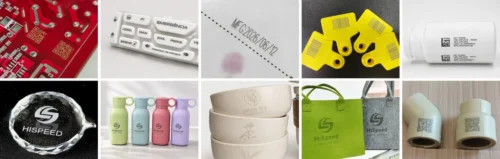
Electronic components are usually small, with high information density and strict marking precision requirements. UV laser marking can create clear characters, QR codes, and serial numbers on chips, connectors, PCB materials, plastic housings, and electronic accessories.
Ø Medical Devices and Consumables
The medical industry requires stable and traceable product identification. UV laser marking can be used on medical plastic parts, reagent tubes, syringes, pharmaceutical packaging, and medical consumables. It helps reduce the risk of ink contamination and label removal.
Ø Packaging Industry
In food, beverage, pharmaceutical, cosmetic, and daily chemical packaging, UV laser marking can be used for date codes, batch numbers, QR codes, anti-counterfeiting codes, and brand information. For certain plastic packaging and film materials, UV laser marking provides clear, consumable-free, and permanent identification.
Ø Glass and Cosmetics Industry
Glass bottles, perfume bottles, cosmetic containers, and premium packaging often require a clean and refined appearance. UV laser marking can create delicate and clean marks, making it suitable for brand logos, batch numbers, anti-counterfeiting codes, and decorative markings.
Ø Precision Plastic Products
For PP, PE, PVC, ABS, PC, and other plastic materials, UV laser marking is often used for characters, logos, QR codes, and traceability codes. Compared with processes that create more thermal impact, UV laser marking is more suitable for plastic surfaces that require fine, low-damage marking results.
UV Laser Marking Market Trends in 2026
First, UV laser marking is moving from standalone machines to automated production line integration. More companies are not only purchasing a laser marker, but also looking to integrate the laser system with conveyors, vision positioning systems, and traceability systems.
Second, the demand for QR codes and traceability information continues to grow. As product quality management, anti-counterfeiting, and supply chain traceability become more important, UV laser marking offers strong advantages for small, high-resolution QR code marking.
Third, precision plastics and premium packaging applications are growing. In medical, electronics, cosmetics, and consumer product packaging industries, customers now require not only a successful mark, but also a clear, stable, and visually clean result.
Fourth, sample testing and customized solutions are becoming more important. Different plastic formulas, surface treatments, and colors can all affect UV laser marking results. This makes sample testing an essential step before selecting the final machine configuration.

How to Choose the Right UV Laser Marking Machine
When selecting a UV laser marking machine, power should not be the only factor. Manufacturers should also consider:
- Material type and color
- Marking content, such as text, QR codes, logos, or batch numbers
- Required marking speed
- Product size and shape
- Whether production line integration is needed
- Whether CCD vision positioning is required
- Whether 3D dynamic focusing is required
- Requirements for heat impact, contrast, and appearance
For most industrial applications today, a 5W UV laser is usually a more practical starting point. It provides a good balance of marking fineness, speed, and material compatibility, making it suitable for common plastics, glass, electronic parts, medical consumables, and packaging materials.
If the customer has higher requirements for production capacity, marking speed, or marking area, 10W, 15W, or higher-power configurations may be more suitable.
However, UV laser selection cannot be decided by power alone. Material formula, color, and surface treatment can all affect the final marking effect, so sample testing is still the key step in confirming the right configuration.
HispeedLaser UV Laser Marking Solutions
HispeedLaser focuses on industrial laser marking equipment and provides UV, Fiber, CO2, and other laser marking solutions for different materials and production scenarios.
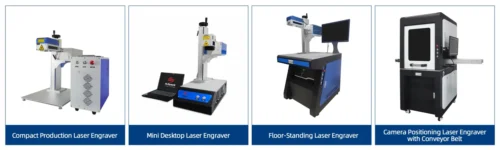
For UV laser applications, we can provide desktop UV laser marking machines, fully enclosed UV laser marking machines, CCD vision UV laser marking systems, online flying UV laser marking machines, and 3D UV laser marking solutions according to the customer’s material, marking effect, production cycle time, and automation needs.
Whether the application involves precision plastics, glass packaging, medical consumables, electronic components, or automated packaging lines, a suitable UV laser configuration can help manufacturers improve marking quality, reduce consumables, and increase production stability.
Final Thoughts
UV laser marking is no longer just a niche technology for precision marking. In 2026, it is becoming an important solution for manufacturers who need clean, permanent, high-contrast, and traceable marks on sensitive materials.
For companies working with plastic, glass, electronics, medical products, or packaging, UV laser marking offers a practical path toward higher marking quality and more reliable production.
If you are not sure which UV laser power or machine configuration is suitable for your product, sample testing is usually the best first step.