
Firearms are sensitive products, so the information marked on them must be precise and easy to read. Ensure the marks are permanent and durable. A firearm laser engraver helps create clear, durable markings.
This article explains everything about firearm laser engravers and how they work. We will identify the most popular materials used. Then we will evaluate which laser technology might be useful.
Common Materials and Components Used for Firearms
Firearms use multiple types of metals for different components. Each metal serves a particular need, based on the design. Some provide strength, while others keep it lightweight or corrosion-resistant. Generally, the right choice depends on the specific use and the part types. Here are six common metals used in firearms for different parts.
Carbon Steel
Carbon steel is one of the most commonly used firearm metals and a classic one. It provides multiple advantages. For example, carbon steel is strong, tough, and easy to machine. Manufacturers prefer it for barrels, receivers, slides, and bolts. The Remington 700 and the 1911 pistol often use it. But if you leave it bare, it may rust over time. You can use bluing or Parkerizing to protect it from moisture and wear.
Stainless Steel
Stainless steel is well known for its resistance to rust and wear in harsh conditions. For this reason, it’s a preferable option for marine use. Makers use it for barrels, frames, slides, and more. The Ruger Mini-14 and many Smith & Wesson revolvers are available in stainless steel.
Aluminum Alloys
Aluminum alloys are popular for their lightweight strength. Using aluminum alloys in a firearm reduces its overall weight. Many firearms use aluminum for frames, handguards, scope mounts, and receivers. For example, the Air-15 uses 7075 aluminum for both the upper and lower receivers.
Titanium
Titanium is also a commonly used metal in firearms. It’s lightweight and quite strong. Moreover, it resists corrosion better than some other steels. But titanium is relatively costly and hard to machine. Therefore, manufacturers use it for suppressor baffles, firing pins, cylinders, and small frames. It also suits premium, lightweight firearms. Lasers can easily create colored, bright oxide marks on its surface.
Tool Steel
Tool steel is extremely strong and wear-resistant. This metal can remain intact and maintain its shape under high heat and stress. It is widely used for hammers, sears, triggers, extractors, and bolt parts. These parts constantly face friction and impact, which is why makers use this metal.
Zinc and Brass
Zinc is also a common metal used in firearms. It is relatively cheap and easy to cast. It is widely used for pistol frames, triggers, and other smaller parts on a low budget. In contrast, brass is smooth and soft. It can be used for bushings, cartridge frames, and other fittings. Both play a vital role and serve different needs in a firearm.
Why Choose a Laser Engraver for Firearm Marking?
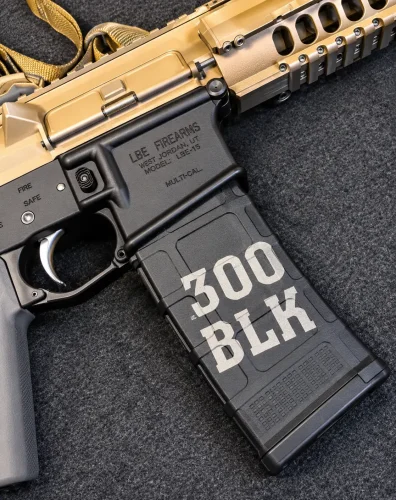
A firearm laser engraver uses a highly focused beam of light to mark the metal surface. When the beam contacts the metal, it alters the surface according to the design. It can remove, melt, or darken the metal surface. During the process, a computer guides the beam with high accuracy, producing a high-quality design. The result remains sharp, clear, and permanent.
You may be wondering why you should opt for a laser engraver for a gun. Well, a gun engraving laser has clear advantages. It’s fast and offers superior precision throughout the process. Moreover, the beam never directly touches the surface. As a result, there is no tool wear. You don’t need to worry about material safety. Each mark resists rust, heat, and other harsh conditions. The process is clean and requires no consumables. So there is no extra cost. You can also repeat the same result on many parts.
In addition to these advantages, a firearm laser engraver is also known for its versatility. You can use it to mark a wide variety of materials, including steel, brass, titanium, zinc, aluminum, and more. It can engrave text, logos, barcodes, and serial numbers. One single system can handle many different jobs.
What Laser Engraver Do You Need for a Firearm Laser Engraver
Nowadays, different types of lasers are available in the market. Choosing the right one matters most here. Each type works differently. Some are ideal for marking metals, while others can mark plastics, coated metals, or delicate finishes. A firearm can be marked on many materials and finishes. Therefore, the best choice depends on the material and use. Here is a breakdown of four key laser types.
Fiber Laser
A fiber laser engraving machine is a top choice for engraving firearms. It can engrave all the metals used in firearms. Examples include aluminum, zinc, steel, stainless steel, and more. It can also create deep engravings for serial numbers on barrels or receivers. This firearm laser engraver is also fast, durable, and requires less maintenance.
MOPA Laser
MOPA laser is a special type of fiber laser. This system lets you change the pulse width according to your needs. This way, you can also control the heat impact on the surface. Furthermore, MOPA lasers can create black marks on stainless steel and bright colors on titanium. They can also mark anodized aluminum with high contrast. For this reason, they are suited for engraving logos, text, and designs.
CO2 Laser
A CO2 laser engraver doesn’t really work on metals. However, it does a pretty good job on coated metals. It mainly works best on non-metals such as plastics, wood, acrylic, ceramics, and other materials. Firearm manufacturers often use it for wooden grips, leather holsters, and acrylic parts. You can also use it to mark coated or painted surfaces. It can serve as a support tool, but not as the primary one.
UV Laser
A UV laser uses a shorter wavelength. It generates little heat during application. This system works well on polymer, plastic, and coated surfaces. A UV laser is safe for heat-sensitive materials. It typically costs more but offers great precision.
Laser Marking Applications
Laser marking has many applications in firearm manufacturing. Each mark serves a specific purpose. Some marks meet legal requirements, while others serve branding, style, promotion, or tracking. This section covers seven applications of firearm laser engraving machines and how they add value.
Serial Numbers
A laser engraving machine can engrave serial numbers. It gives the product a unique identity. Lasers produce deep, clean serial numbers. They appear on receiver surfaces or frames. Each mark meets legal rules.
Model Marks
Model marks indicate the exact type of firearm you want to buy. Most firearms include a model name. Firearm laser engravers mark them with sharp, clear text. As a result, buyers can easily identify it.
Maker Details
Maker details indicate the name of the company that built the firearm. People often add the country or city name. This practice builds trust and a strong connection. Lasers make them last for years.
Proof Marks
Proof marks show that the firearm passed safety testing. Testing is essential because it checks how much pressure a firearm can withstand. Laser marking keeps them small and durable.
Logos and Branding
Proof marks show that the firearm passed the safety test. Testing is essential because it checks how much pressure a firearm can withstand. Laser marking keeps them small and durable.
Traceability Codes
Traceability is important for tracking the product throughout its lifespan. It can be barcodes, 2D data matrix codes, and other codes. Laser marking creates these codes with high precision. Scanners can easily read these codes to check the firearm details.
Customization & Decorative Engraving
Many people want a personal touch to their firearm. This is where a laser engraver becomes a more efficient option. It can literally engrave names, patterns, or scrollwork. Lasers can add details that are hard to achieve by hand. It adds more value.
Best Firearm Laser Engravers
The best firearm laser engravers depend mainly on the types of firearms you are working with. What materials do they include? How about your marking requirements? Consider your project needs to choose the best option. The following two firearm laser engravers are best suited for marking all types of firearms.
Fiber Laser Series & MOPA Laser Engravers
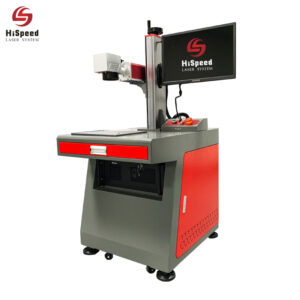
The HiSpeed MOPA fiber laser marking machine is an advanced tool for marking metals with different colors and pulse widths. It comes in different power wattages, ranging from 20W to 120W. The system also uses a JPT MOPA fiber laser source with a 300 x 300 mm working area. It can mark lines as thin as 0.1 mm.
This firearm laser engraver can handle many metals. It marks steel, stainless steel, aluminum, titanium, and plastics. It can also create deep black marks on anodized aluminum. You can easily engrave in purple, blue, green, yellow, and other colors.
CO2 Laser Series
The Hispeed CO2 series offers 100W-300W power options. It uses a CO2 metal laser tube and can reach speeds up to 5000mm/s. The repeatability score is ±0.01 mm. Another advantage is its rotary system. It lets you load and unload parts easily.
It’s well suited for coated stainless steel. The beam can remove it without damaging the metal beneath. As you know, it’s a non-contact process, so the coatings don’t peel away. It can handle coated parts, wooden grips, and leather holsters.

Summary
Laser engraving provides firearm makers with a permanent marking solution. Fiber lasers and MOPA lasers are ideal for marking metals. CO2 laser engraver is perfect for engraving wood, coatings, and leather. It can also be used for secondary design products if needed. Lasers provide high-precision marks with superior quality and durability. It serves many different needs. Now, the right choice depends on your material and project requirements.
For further queries, feel free to contact us. Our Hispeed experts are ready to guide you and enhance your capabilities. Let’s bring innovation and make ideas possible.